

Arundel Castle: A nature lover’s dream day trip from London
There’s something about a trip that starts with stepping onto a train, rather than starting the car, that I just love. There’s very little effort required, no traffic, no sat nav, no stresses about parking, and it immediately shifts the tone of a day out. Planet friendly to boot.
Having grabbed my tickets on the simple to use Southern Railway app, it’s a gentle glide out of the city and into the countryside. Fields begin to stretch out, the light changes, I’m eagerly spotting wildlife through the window and before long, the unmistakable silhouette of a castle appears on the horizon.
I’ve arrived in Arundel, West Sussex, often said to be one of the best and most picturesque places to live in the UK.

Reading, watching the world go by on Southern Railway, so much better than driving
A slow start (the good kind)
Arundel is the sort of place that encourages you not to rush. From the station, it’s a short wander into town, past some verges planted with wildflowers and plants for pollinators, dead hedges providing habitat for beneficial insects and other small creatures, bee hotels on every other fence rail. A promising start for a nature nerd like me.
Reaching the town centre, and keeping to the day’s castle theme, I made a beeline for Motte & Bailey Café. Coffee first, always, and this time I succumbed to a pastry too.
Read more: Exploring Arundel scenic walks
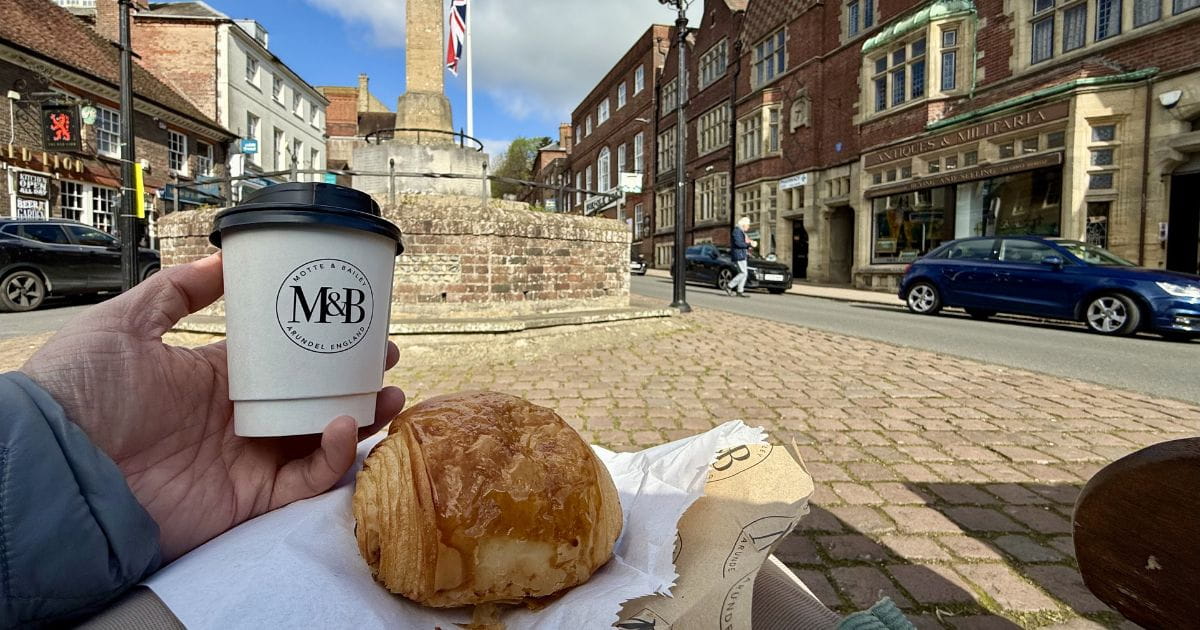
A proper start to the day, caffeine and pastry fix to get my bearings
A flaky pain au chocolat, a strong flat white, and a bench in the sunny town square watching the town wake up. Simple pleasures, and operation slow down is coming along nicely.
Arundel Castle: Gardens in full bloom
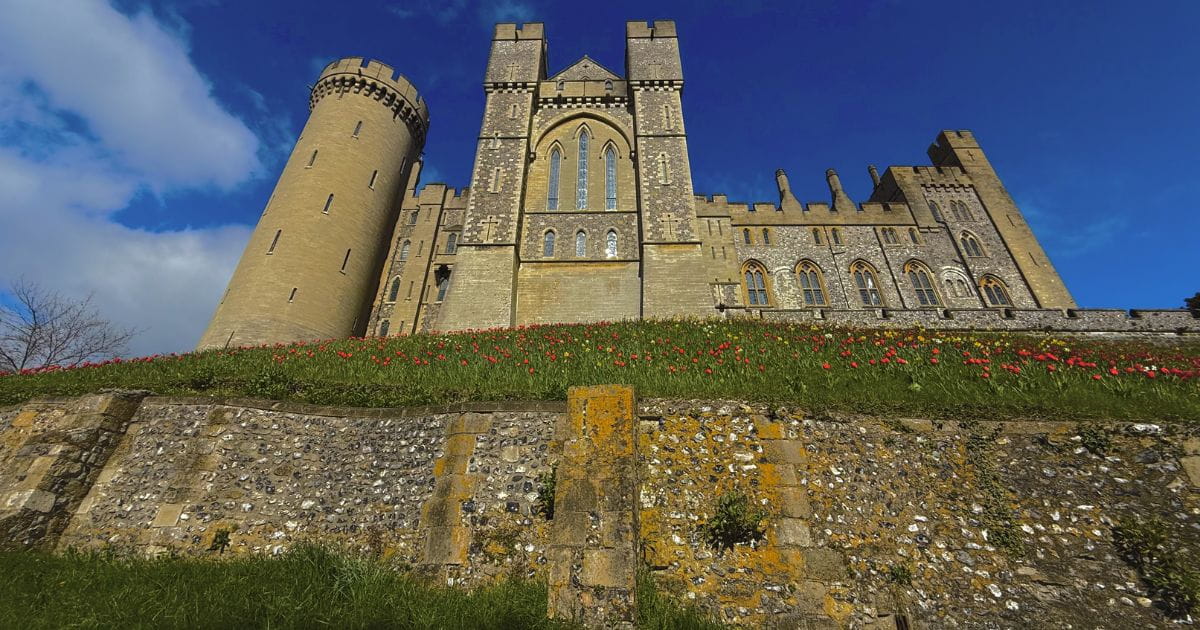
The Castle greets you on arrival, sitting atop a riotous meadow of colourful blooms
If you think you know tulips, think again. I’d timed my visit with the castle’s annual tulip festival, but nothing quite prepares you for the scale of it. Thousands upon thousands of blooms, in colours that feel almost exaggerated. Deep oxblood reds, soft apricots, electric pinks, magnificent magentas, all layered through the formal gardens and spilling into wilder corners.
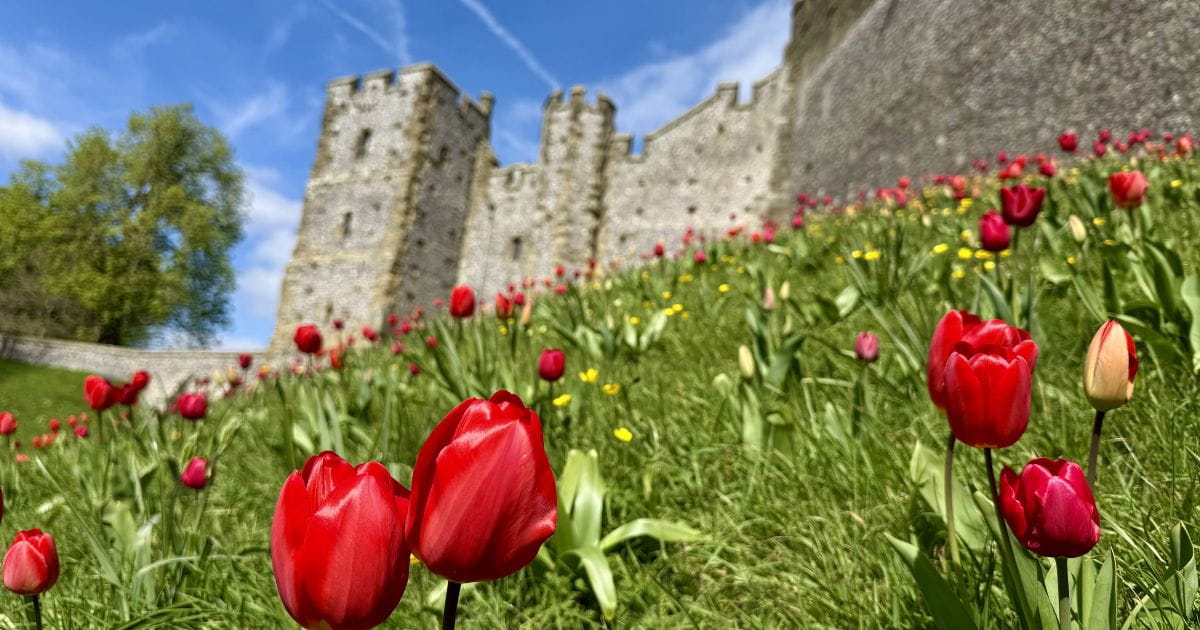
The slopes surrounding the castle were like something out of a fairy tale
It’s not just planting, it’s choreography. And it was this large-scale naturalisation of tulips into meadows and lawns that really fascinated and stunned me in equal measure. Tulips planted in gorgeous drifts, en masse, making the slopes surrounding the imposing castle look like an impressionist painting. Monet, eat your heart out!
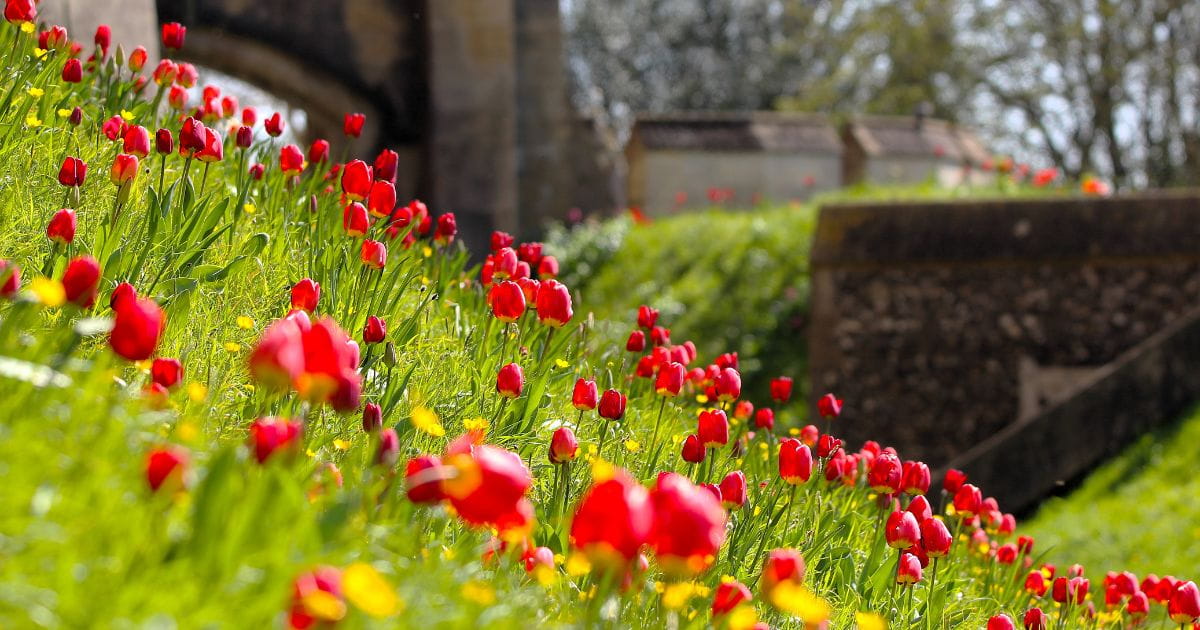
Some festooned in red tulips dancing through meadow buttercups
I was lucky enough to bump into the Head Gardener, Martin Duncan, and we hit it off chatting about wildlife-friendly gardening. He walked me through the thinking behind it all: how colour palettes are mapped, how succession planting keeps things moving, and perhaps most interestingly for me, how much of the garden leans into a more naturalistic, wildlife-friendly approach.
Beyond the formal beds, things loosen. Edges blur. Lawns give way to longer grass.
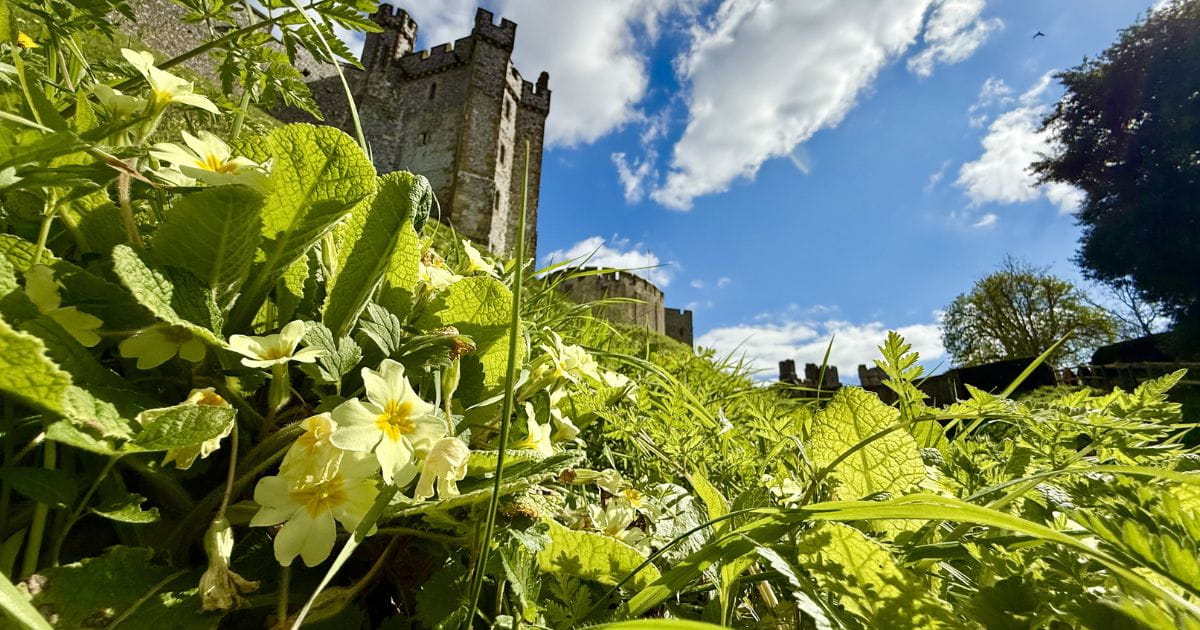
In other areas wildflower meadows starting to burst forth with swathes of Primroses
And around the ponds, the planting becomes properly wild. What a cool job Martin has. “If only I had a Castle and 40 acres to play with instead of my modest London allotment”, I ponder.
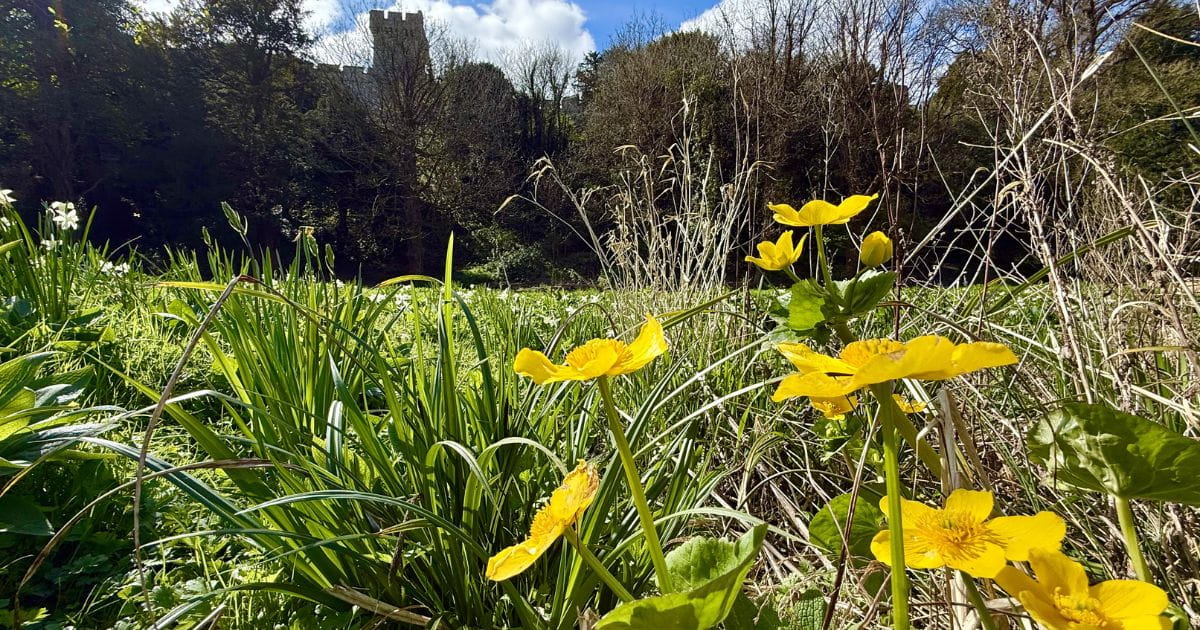
A real favourite pond-side plant of mine, Marsh Marigold, heralding spring
Top tips I learned from Martin for naturalising tulips in grass, if you’re interested. Plant them deep, at least 4 inches below the surface. And choose from the following Arundel tried and tested varieties:
- Purple Dream
- Purple Heart
- Oxford
- Golden Oxford
- Apeldoorn
- Yellow Apeldoorn
- Ile de France
You’re welcome.
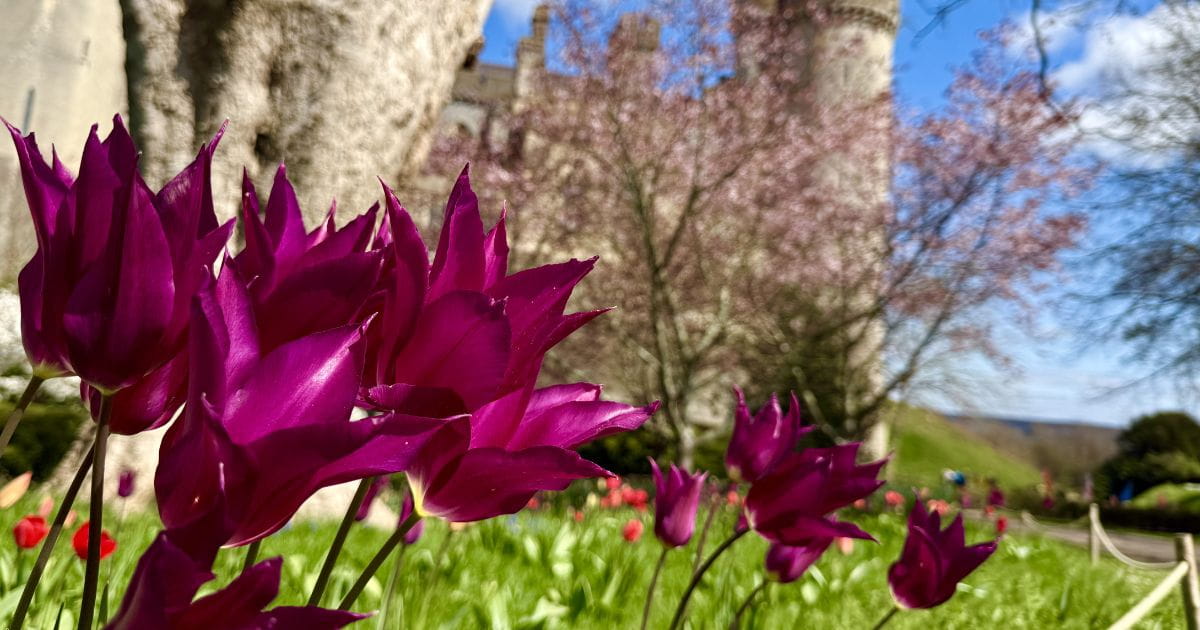
Every corner you turn, a new delightful combination of spring blossom and bulb
Of course, as fitting of a castle garden and grounds, there was also plenty of formality and more ordered ornamental gardens, pots brimming with colourful displays, grand obelisks and pergolas, fountains, lawns and a delightful kitchen garden.
Martin was very generous with his time as countless members of the public stopped to ask questions, thanking him and his team for such an incredible floral display.
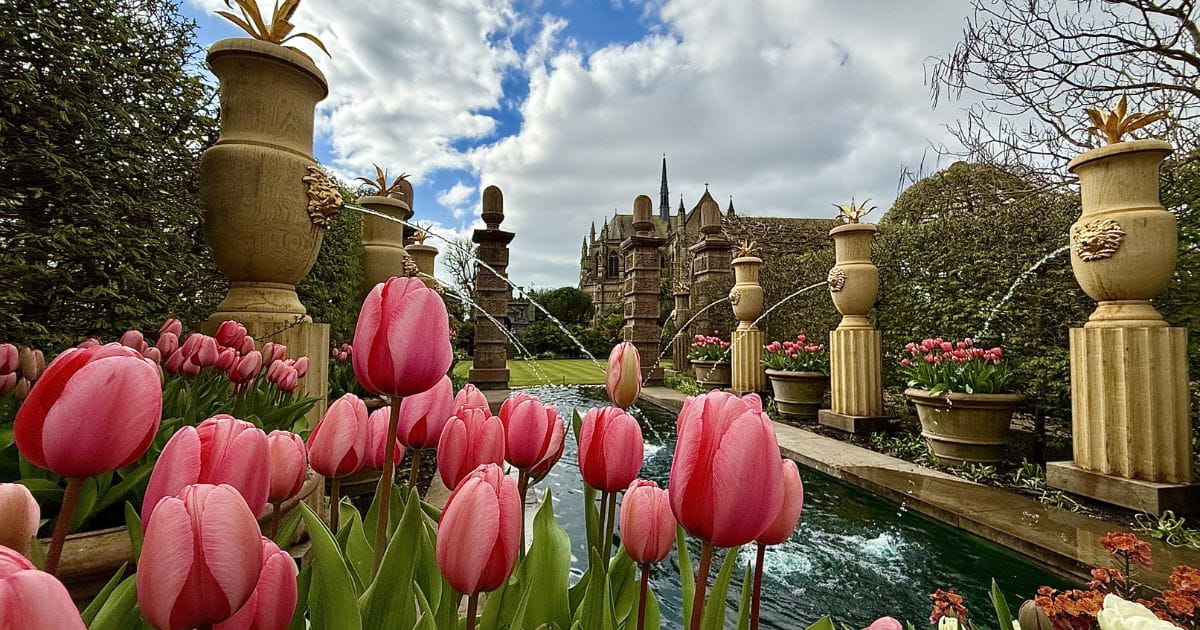
Grand, formal gardens aren’t my personal style, but you can’t fail to be impressed
The bees, oh my (and one in particular)
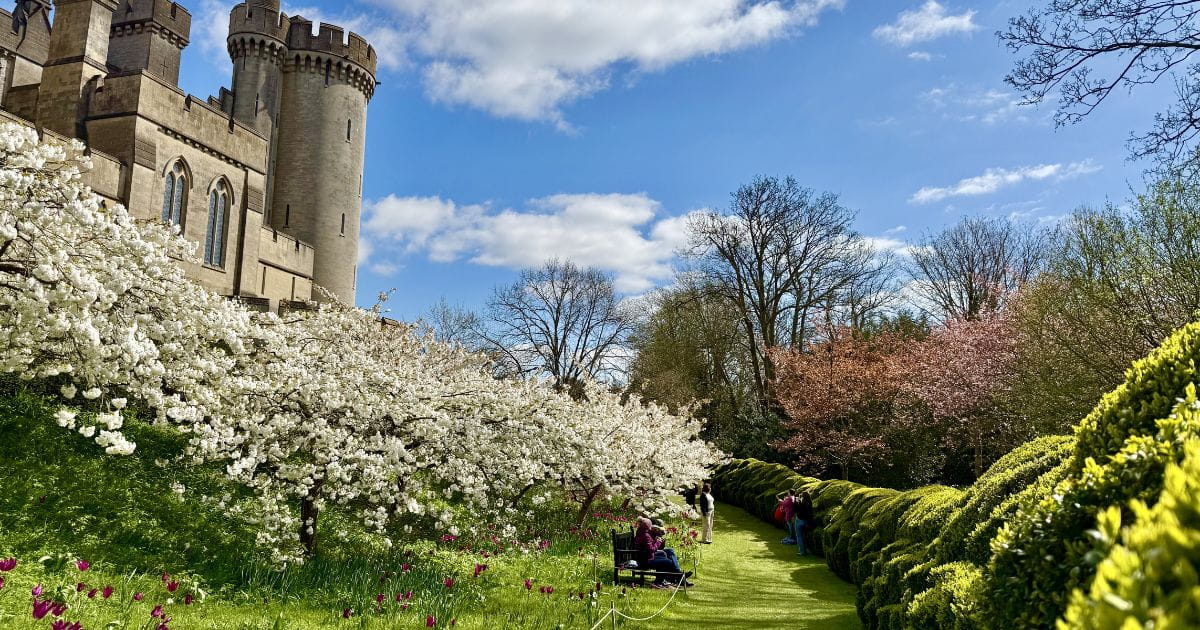
Japanese Cherry ‘Tai Haku’ in blossom, facing ‘Baboon Rock’ topiary Yew hedge
It didn’t take long before I got distracted. Beyond a stunning avenue of brilliant white cherry blossom trees on one side, and a whimsical topiary hedge on the other resembling Baboon Rock, a nod to Martin's African upbringing, lay a stumpery. The biggest and best stumpery I’d ever seen, not too far from the castle entrance.
“What’s a stumpery?”, I hear you ask. Well, it’s a collection of tree stumps and fantastically shaped root systems arranged ornamentally and usually surrounded by woodland style planting.
Hovering low over the flowers were dozens, no, hundreds, of my favourite spring species: the Hairy-Footed Flower Bee (Anthophora plumipes). What a name. And what a bee. If you’ve never noticed them before, they’re worth getting to know. The males are small, gingery, and endlessly in motion, zipping around like tiny, over-caffeinated drones.
The females are darker, almost velvety black, with those unmistakable pollen-loaded orange hind legs. Both have long tongues they extend to reach the nectar deep within tubular flowers.
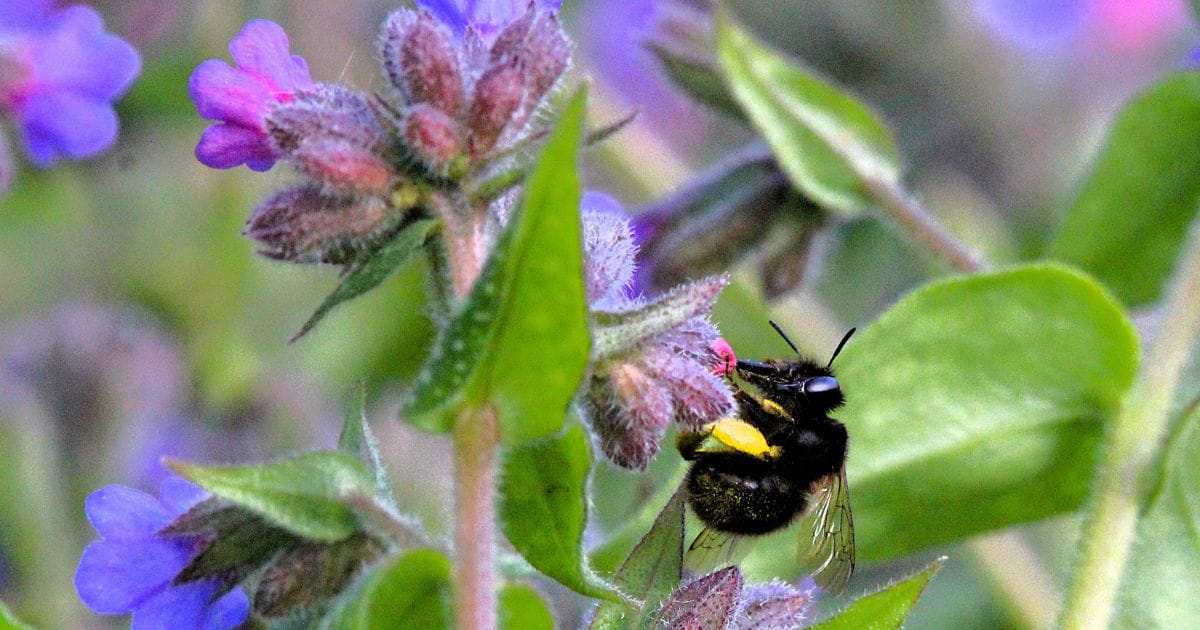
Female Hairy Footed Flower Bee, pollen baskets fully loaded to bring back to her nest
What makes them so special is their energy. They’re among the first bees to properly get going in spring, built for cooler temperatures, and they don’t so much visit flowers as attack them with enthusiasm.
Watching them work on a bed of tulips, primroses or pulmonaria* is like watching a time-lapse in real life. Plant those in your garden, or leave some patches of native Spring wildflowers like Red and White Deadnettle. You’ll thank me later.
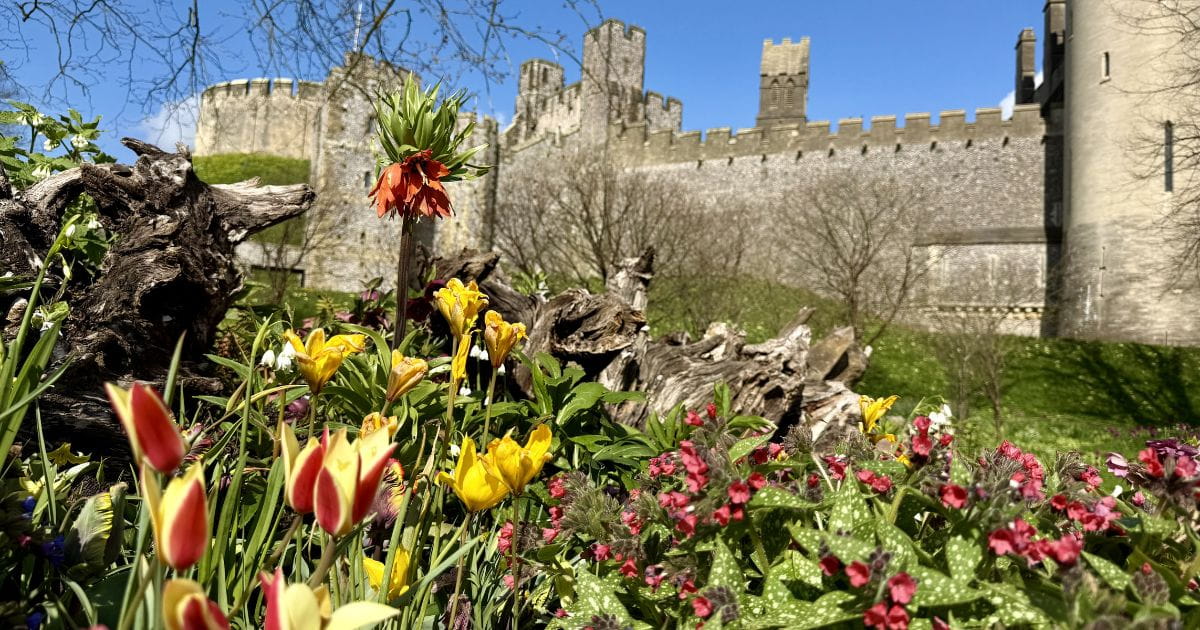
This was a stumpery garden to beat all stumpery gardens, and pollinator heaven
And then there are the imposters. Bee flies, like the wonderfully named Dark-Edged Bee Fly (Bombylius major) hover nearby, long proboscis extended, feeding mid-air like tiny hummingbirds. They look harmless (and they are to humans), but their life cycle is something else entirely. Their larvae are parasites of solitary bees, so adults mimic bees and hover outside bees nests, flicking eggs into their burrows with surprising accuracy. Then the resulting grubs, baby Bee Flies, consume the baby bee grubs or larvae. It’s nature at its most intricate, beautiful and a little bit brutal.
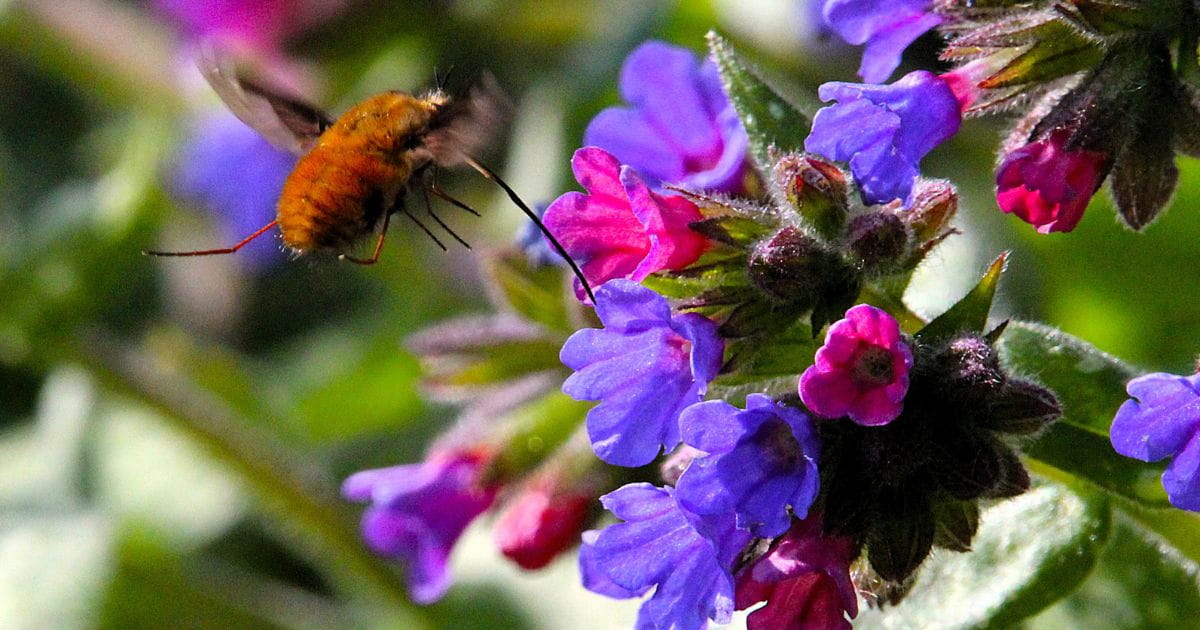
*Fun fact on Pulmonaria: this lovely Spring flower has a neat trick. It tells the truth to its pollinators. The flowers shift colour from pink to blue once they’ve been pollinated, effectively signalling to bees which blooms still have nectar and which are no longer worth the effort. It’s a rare example of ‘honest signalling’ in nature, saving everyone time, and keeping those busy spring foragers moving efficiently.
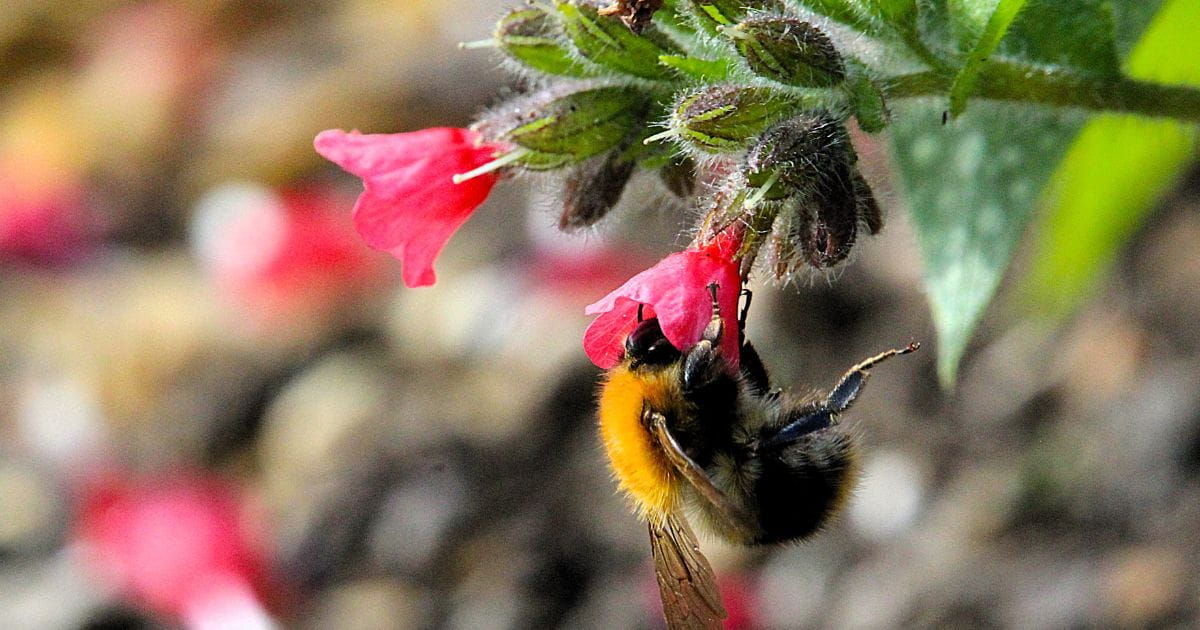 A Common Carder Bee, one of our 24 UK Bumblebee species, sipping nectar
Inside Arundel Castle
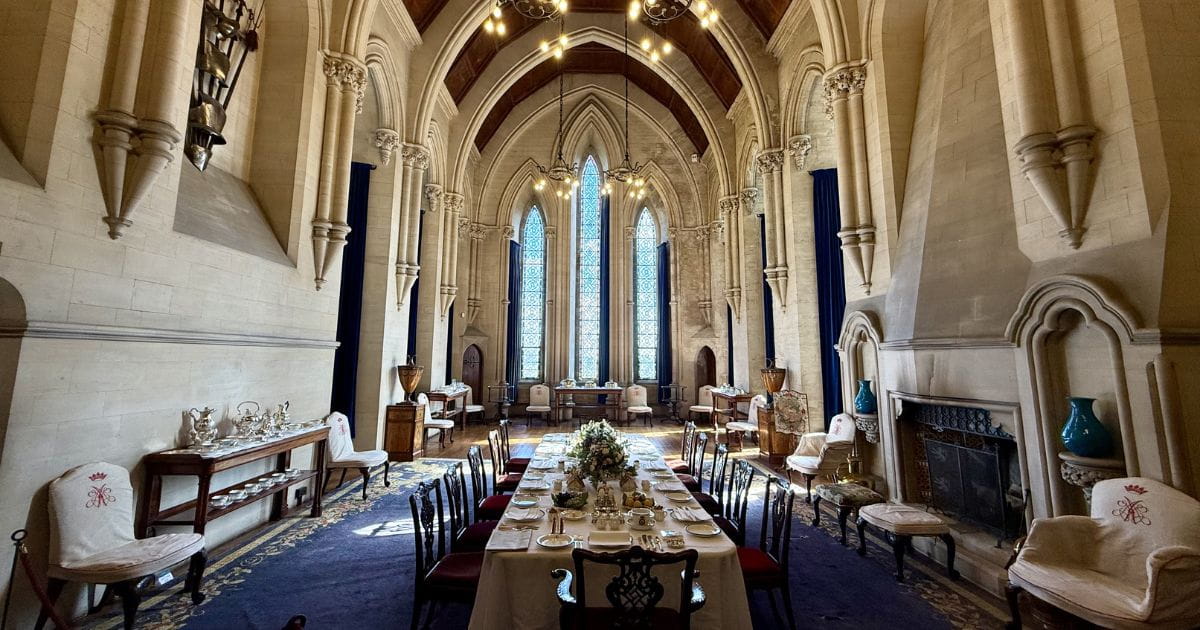
What a dining hall, I quite fancied lunch here but the café would have to do
It’s easy to lose yourself in the gardens, but stepping inside the castle is like shifting gears entirely. Arundel Castle isn’t just a backdrop, it’s a living piece of history. Nearly a thousand years of it, layered room by room. I’m no great history buff, but couldn't help but be impressed.
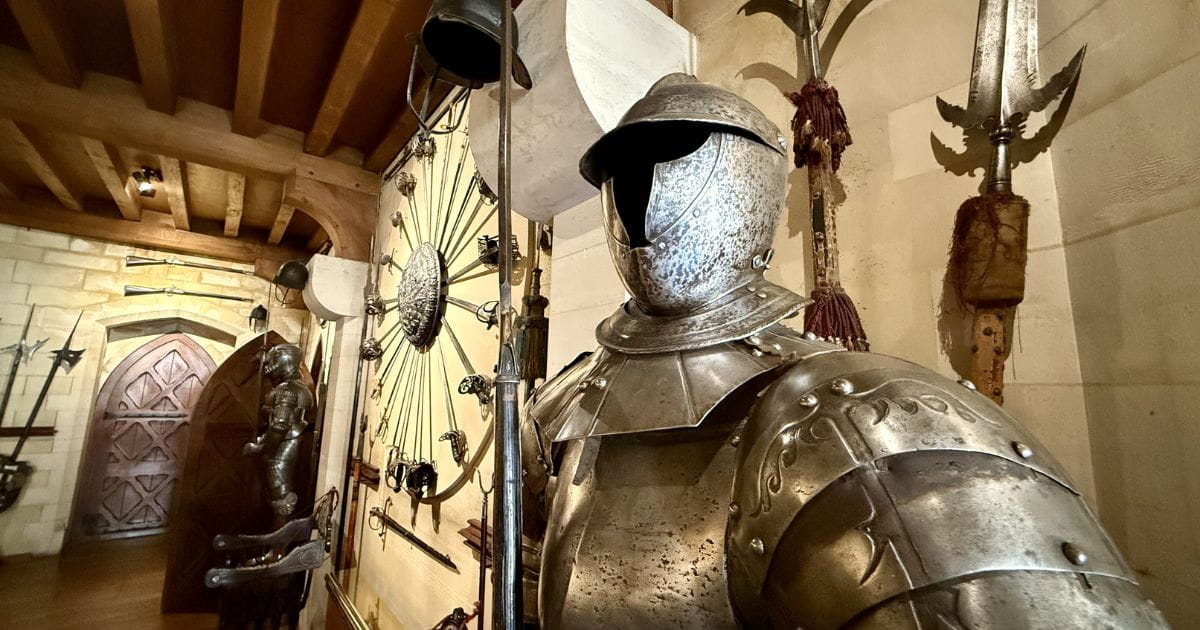
Everywhere you looked inside, the place was dripping in historic artefacts
Grand interiors give way to corridors lined with artefacts, knights’ armour, weapons and then, unexpectedly, to displays of taxidermy that feel like stepping into another era of collecting. Some of it fascinating, some of it slightly unsettling, but all of it a reminder of how our relationship with the natural world has changed over time.
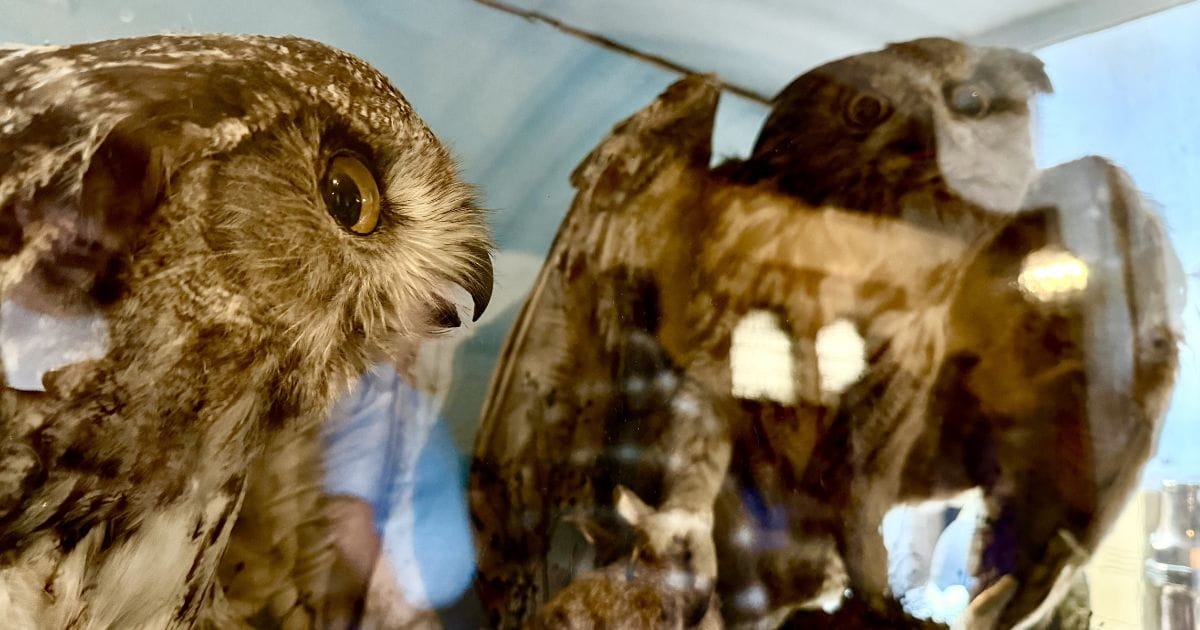
Antique taxidermy Eagle Owls, a species with a long history of being kept at Arundel
Coffee, scones and a wilder wander
Back outside in the more formal gardens, I paused at the castle café for a drink and a scone, partly to refuel, mostly to sit and take it all in. It’s opulent and gorgeous. Above me the wheezy song of a male greenfinch caught my attention, and I spotted him high above the stream of tourists floating around admiring the floral displays. A species that has been declining lots, but seems to be bouncing back more recently.
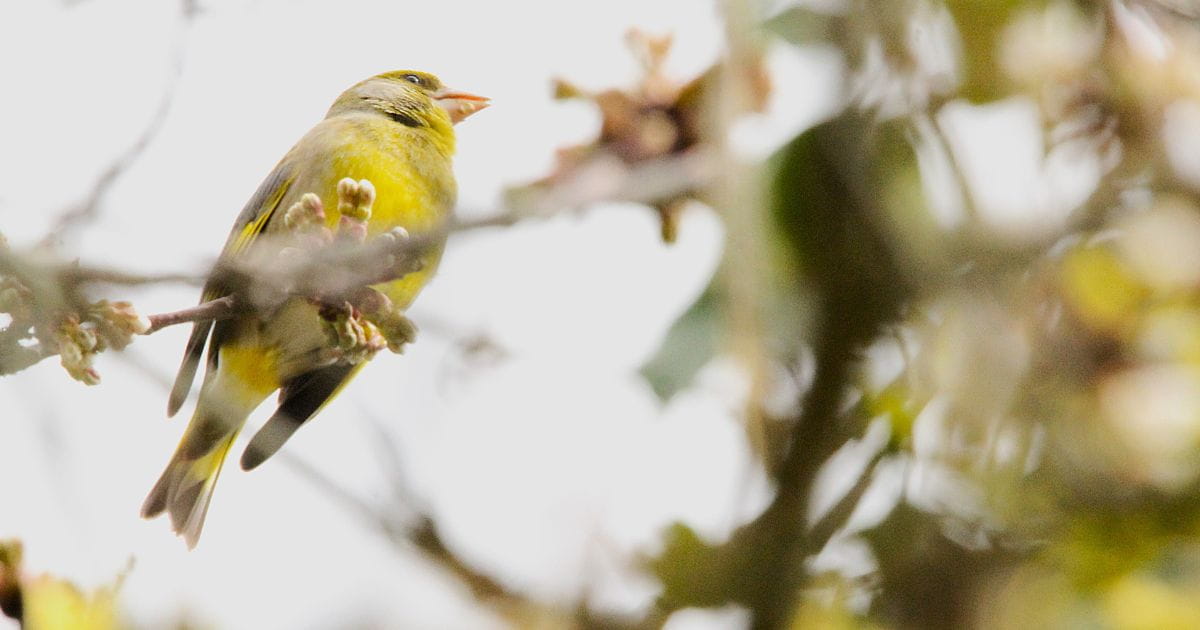
A Greenfinch wheezing overhead, ending his song to proclaim his colour “Greeeeen!”
From there, it’s easy to drift. Down towards the water, past the quieter, wilder edges of the grounds where ponds are left to do their own thing, less manicured, more alive. You start to notice different things here: the hum of insects, the ripple of something just beneath the surface, the way the planting feels like it belongs. Tufted Ducks were cavorting on the pond, soon to be raising young of their own.
Read more: Get closer to nature at Arundel Wetland Centre
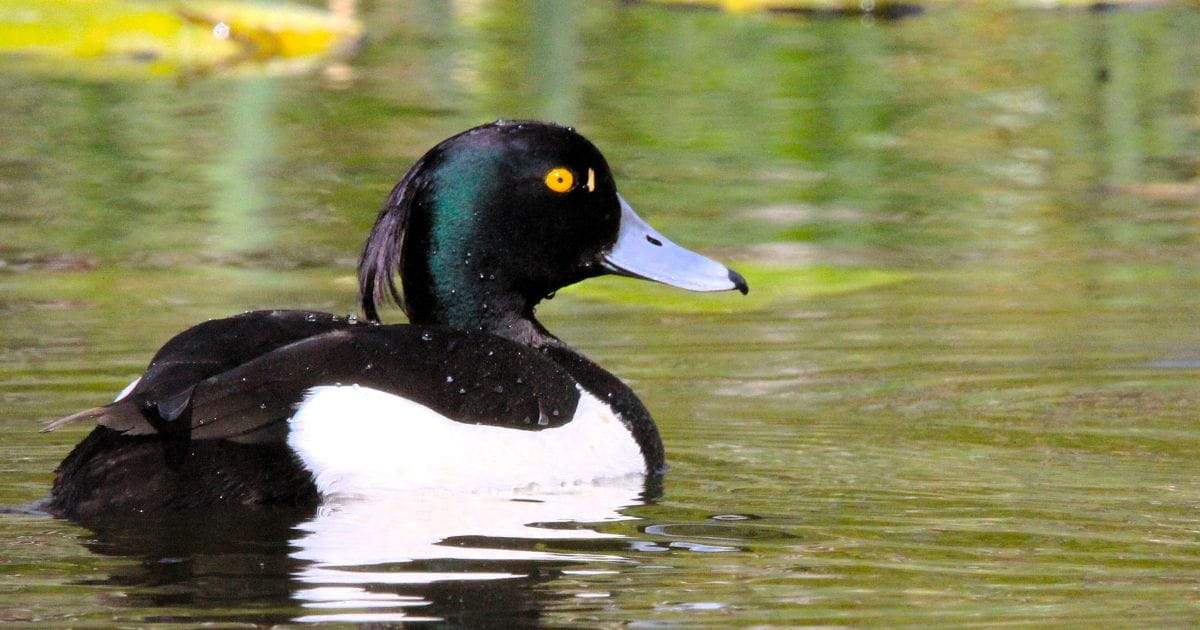
Tufted Duck looking sharp in monochrome Tuxedo, until sunlight hits his iridescent head
A cheeky Grey Wagtail darted and leapt around catching insects from the floating pads of our native water Lily, the Brandy Bottle whose sulphur yellow flowers were yet to emerge.
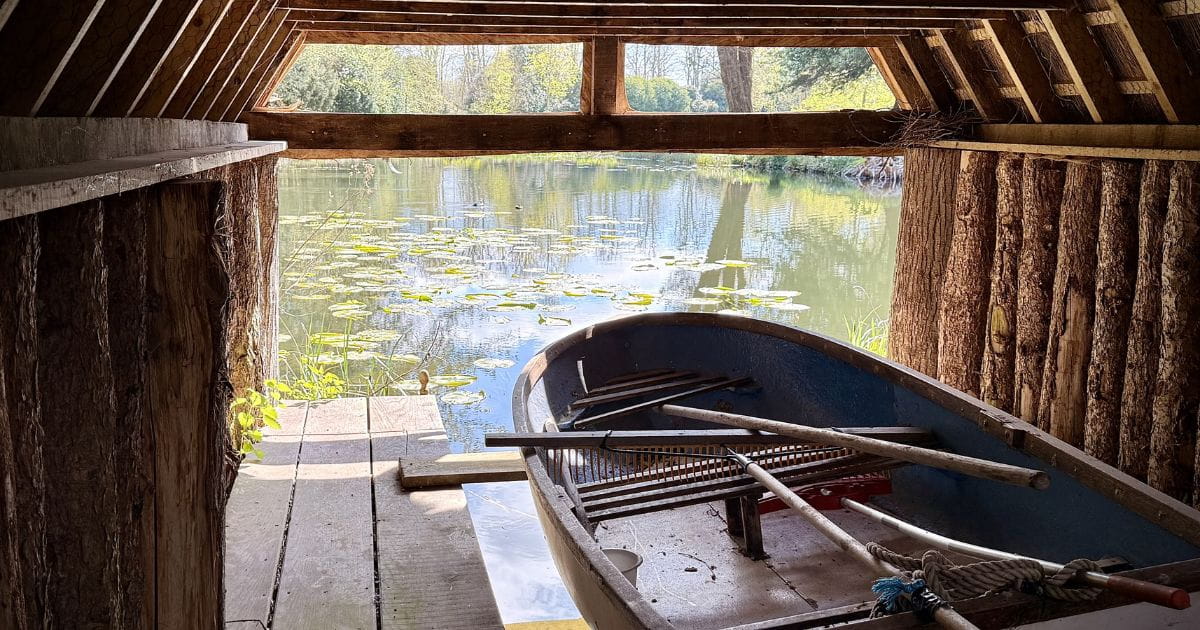
Bucolic scenes as the sun hit the pond outside the gorgeous thatched boathouse
A large Common Carp floated languidly in front of the gorgeous thatched boathouse on the main pond. Perhaps a descendant of the fish kept as a ready source of protein in the Castle ponds and moat in times gone by.
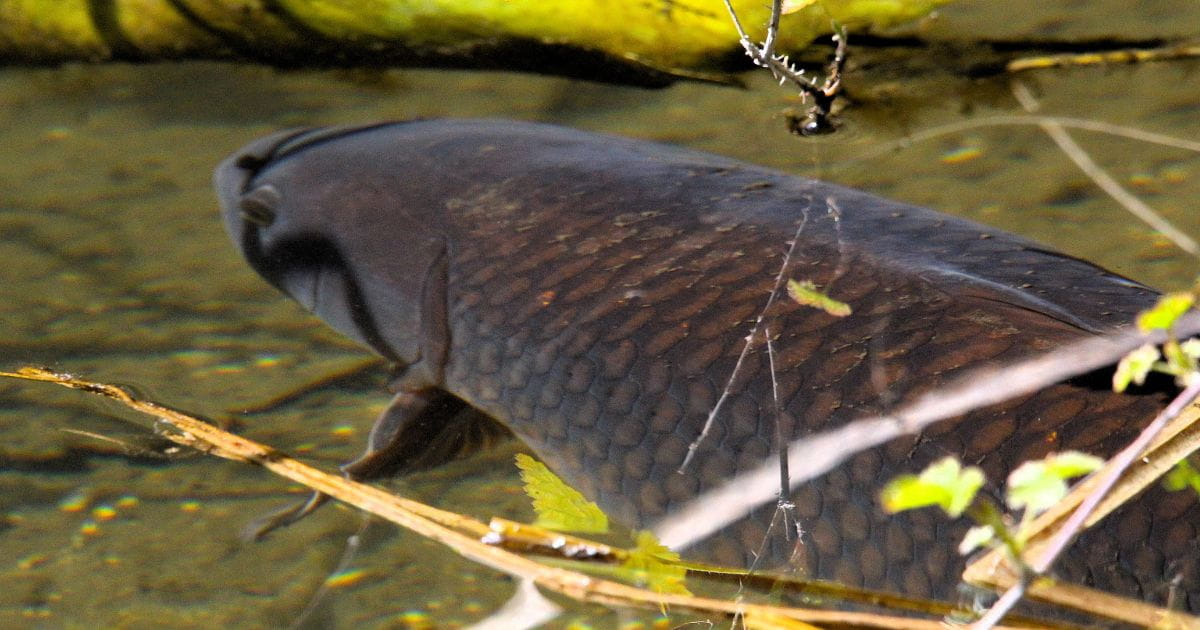
Carp lazing in the shallows, which passersby were delighted to spot once I pointed it out
A proper finish
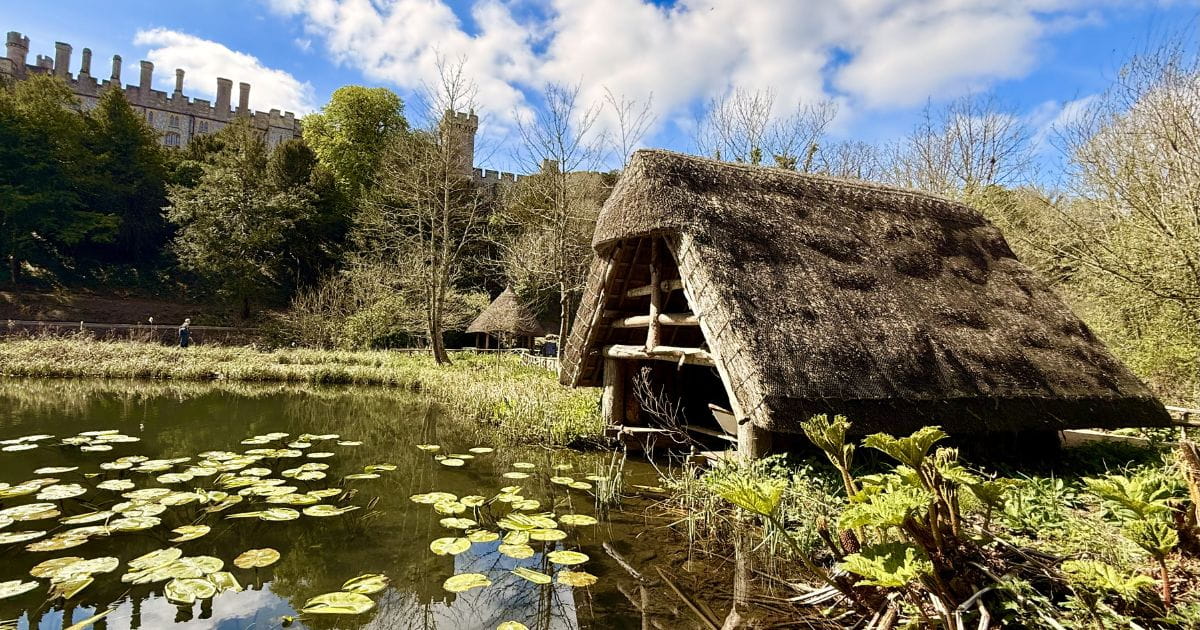
Hard to drag myself away from this scene and glorious wild corners to explore
I’d lost myself in the day’s exploration and lost all sense of time. Before I know it, it’s 5pm. As I’m leaving, it looks like a mediaeval festival is being set up with archery, falconry, dramatic re-enactments and all sorts of stalls selling their wares.
I check the events board quickly as I pass and learn there’s a huge variety of events planned for the whole family throughout the year. I make a mental note of an upcoming plant fair. Like my allotment and balcony back in London has room for more plants. If you know, you know.
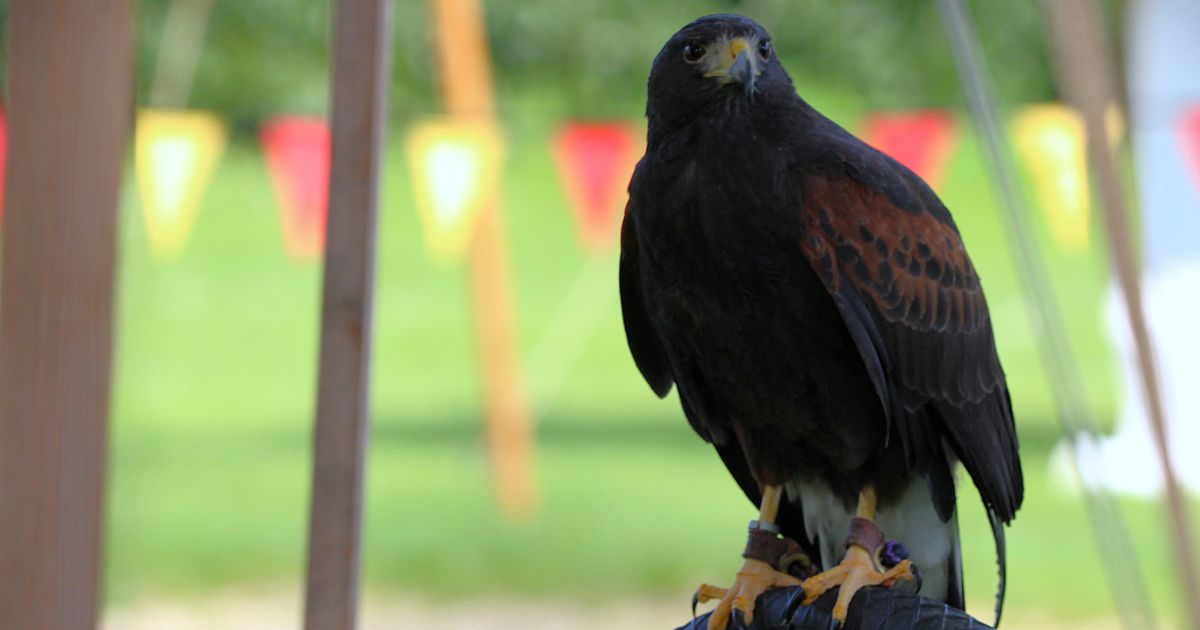
A Harris Hawk, a popular falconry bird, oversees set up of a mediaeval festival event
My stomach grumbled. Before heading back, I decide dinner and a pint is in order so make one last stop at The Red Lion pub. Only fitting for the day of royal history and heraldry I think.
There’s something deeply satisfying about ending a day like this with a pint, a proper meal and a spot of people watching. A chance to sit, to flick back through photos, to realise just how much you’ve packed into a day that never once felt rushed. The menu was traditional pub fare, with some interesting and delicious looking specials.

A great end to a fantastic day, I chose the sea bass special and a pint of cold cider
Homeward bound
And then, just like that, it’s back to the station. That same ease returns, no logistics, no stress. Just a seat, a window, and the quiet satisfaction of a day well spent. The castle fades into the distance, the countryside slips by, and the rhythm shifts again. The hum of the train replacing the buzz of insects. Satisfied with that lingering feeling that you’ve spent the day immersed in nature, being mindful and paying attention to the right things.

Arundel, I’ll be back. What a glorious place to visit.
About the Author
Dr Sean McCormack is a qualified veterinarian, wildlife conservationist, TV presenter and author. He runs the Ealing Wildlife Group, a community volunteer led conservation group in west London who have been presented with the King’s Award for Voluntary Service. He’s also the project lead and license holder on the Ealing Beaver Project, a collaborative community-led Beaver reintroduction project, the first of its kind in Britain being truly urban and fully accessible to the public, supported by the Mayor of London and Beaver Trust, for whom he is a charity ambassador.
Sean hosts his own podcast, Sean’s Wild Life, exploring topics in conservation, animal welfare, food production, rewilding and sustainability. He has just published his first children’s book called Beaver Believers. He regularly presents on TV and radio, with appearances on BBC Springwatch and Autumnwatch, BBC The One Show, ITV This Morning, Times Radio, BBC Radio London and more. To follow his various activities and projects, his Instagram profile is @thatvetsean.
