

Join me on a trip to the charming city of Chichester. I am a London explorer, writer, and founder of the Living London History blog and walking tours. I also love getting out of the Big Smoke every so often to visit many of the other incredible historic places that the country has to offer.
Chichester is a fascinating city, just an hour and a half from London Victoria on Southern Railway. The journey was simple and smooth, avoiding any traffic delays, and it gave me an opportunity to sit down and plan what I was going to see.

Chichester is small and easy to navigate, centred around its stunning cathedral. It has a history stretching back nearly two thousand years and has surviving architecture and remnants from across that whole period from intricate Roman mosaics to medieval halls.
Here are ten stunning historical locations worth visiting in Chichester. You can see a map of all the locations and the walking route that I took here.
Vicar’s Close
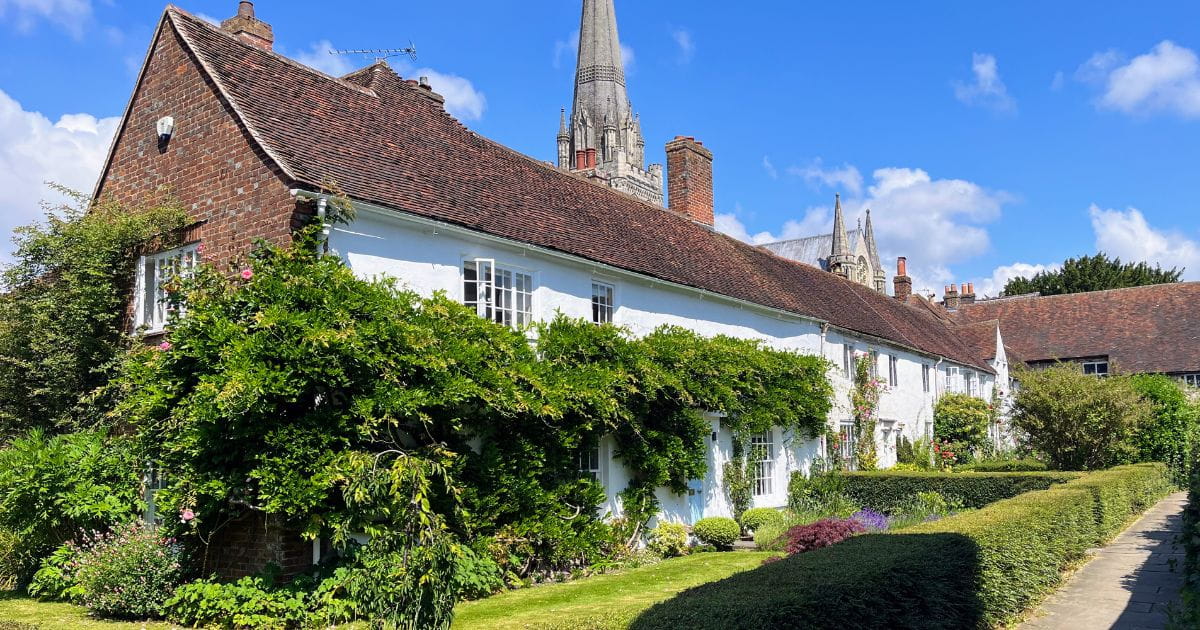
My first stop took me along one of the main four axes of the city, South Street. Here, you will find the Grade I listed, 15th-century Canon Gate, a gatehouse into the cathedral grounds. Through here is the beautiful Vicar’s Close. Vicar’s Close was established in 1475 for the 28 Vicars’ Choral of the Cathedral.
Chichester Cathedral
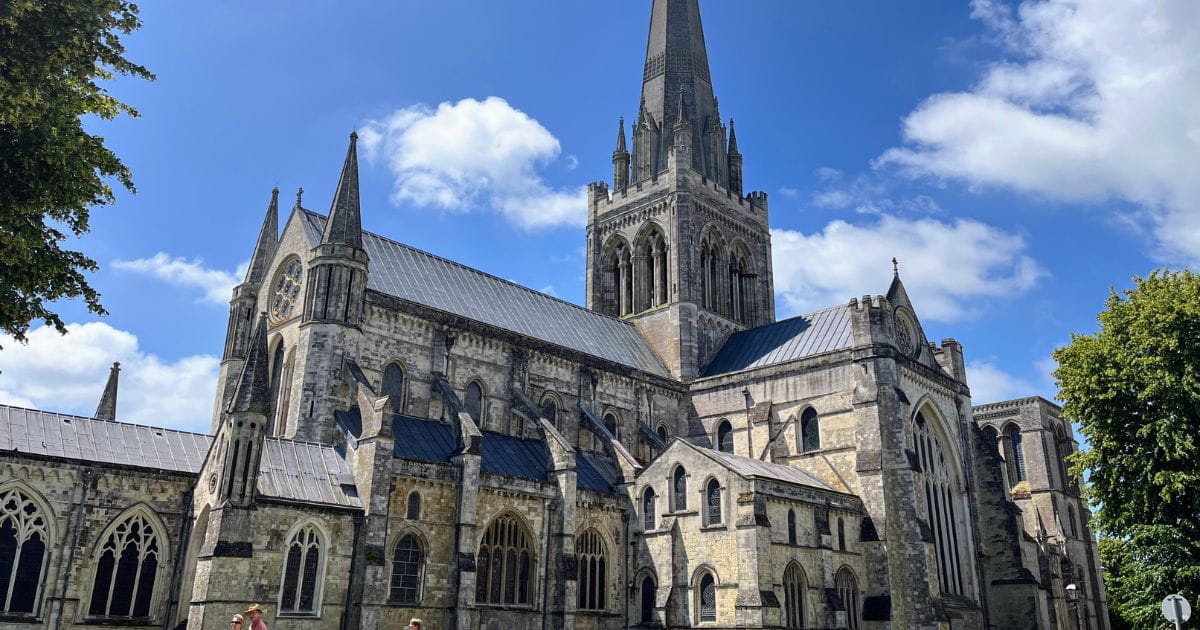
I then headed to Chichester Cathedral, which stands elegantly at the centre of the city. In the year 681, St Wilfred brought Christianity to Sussex and established a cathedral at Selsey, 10 miles from Chichester. In 1076, after the Norman Conquest, the See of Chichester was established and the bishopric moved here.
Construction on a magnificent cathedral began and it was finally consecrated in 1108. The architecture is a mixture of the original Norman/Romanesque, as well as later gothic elements.
On 21 February 1861, the spire and central tower of the cathedral collapsed. Thankfully no-one was killed, and the spire was rebuilt along the original lines by George Gilbert Scott. It is the third tallest spire in England behind Salisbury and Norwich.
There are plenty of interesting things to see inside the cathedral. For example, the cathedral is home to some rare Tudor paintings.
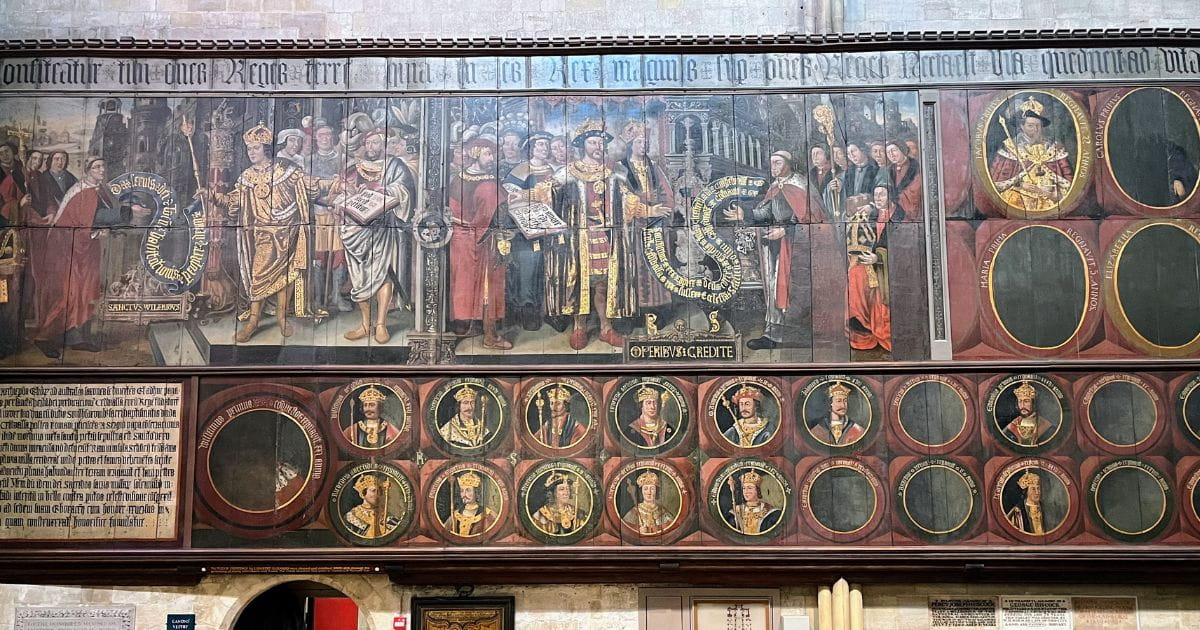
The huge paintings, on wood, were commissioned by Bishop Robert Sherburne in the 1530s and depict the history of the cathedral, Henry VIII confirming the rights of the cathedral, and a series of portraits of English monarchs.
Make sure not to miss the Chichester reliefs. They are two carved panels dating from 1125 and depict the story of Jesus raising Lazarus from the dead. They were discovered behind boards above the choir stall in 1829. Nearby, you will see an exposed section of Roman mosaic from the 2nd century, discovered in 1966.
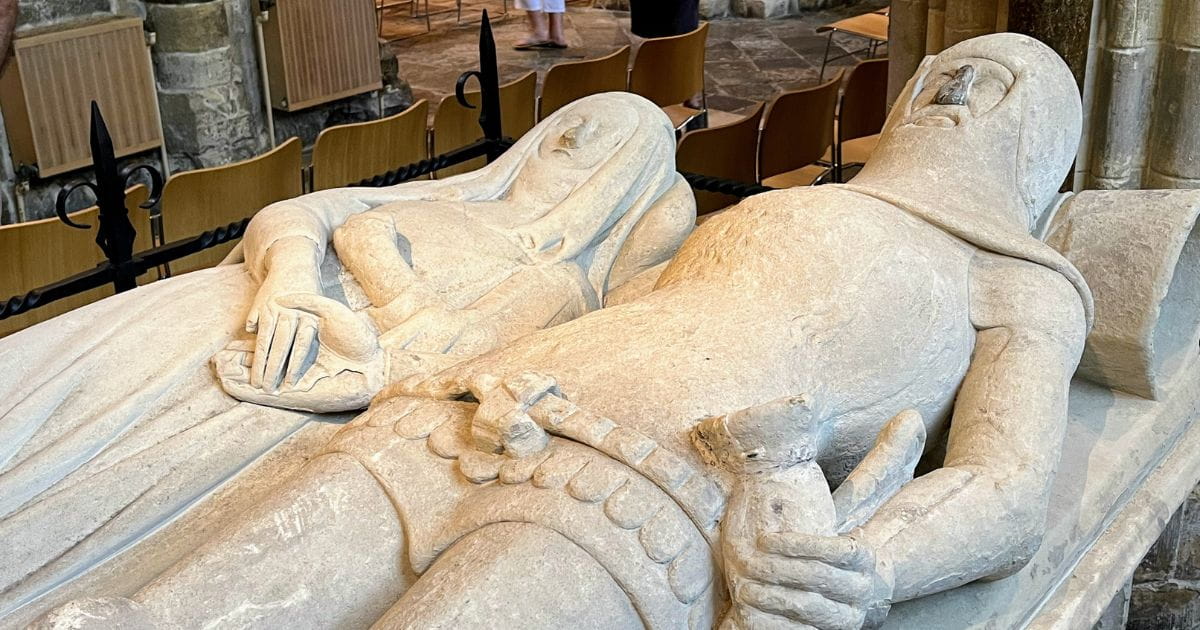
One of the tombs that you can find in the cathedral is called the Arundel Tomb. Dating from 1375, it is thought to depict the Earl of Arundel and his second wife Eleanor of Lancaster. It was first erected at Lewes Priory and moved here after the Dissolution of the Monasteries in 1537. It is rare in that it depicts the couple holding hands.
The Bell Tower
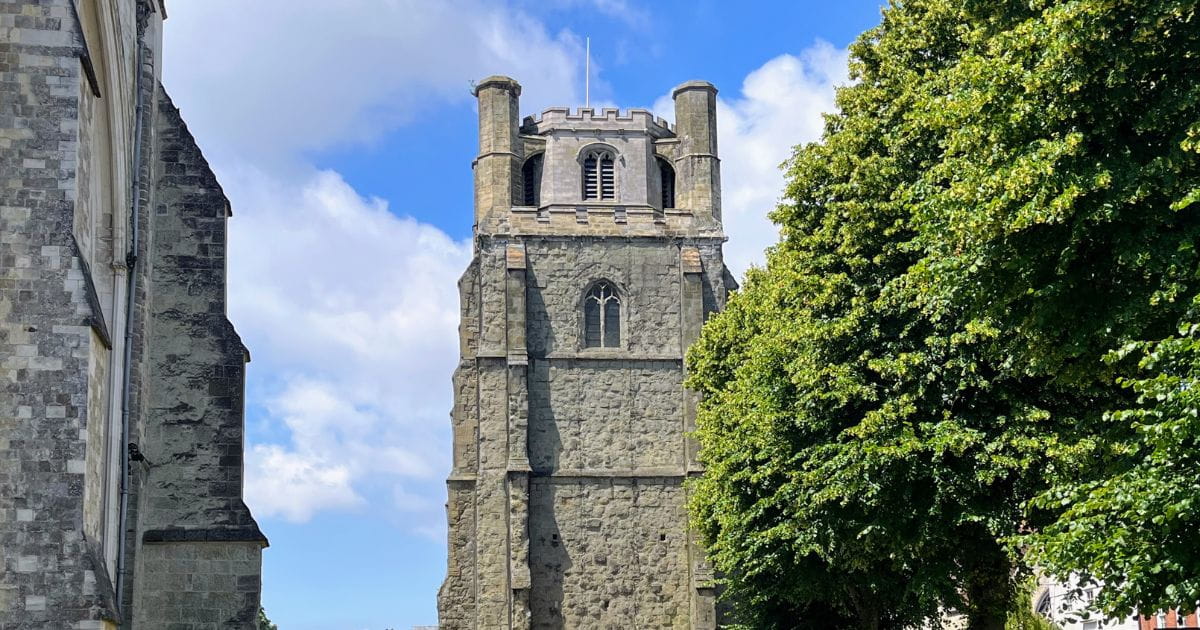
Outside the cathedral, make sure to spot the bell tower. Constructed around 1400, it is unique in the country in being detached from the main body of the cathedral. This decision was made as the towers of the cathedral had already started to subside by 1400.
Bishop's Palace Gardens
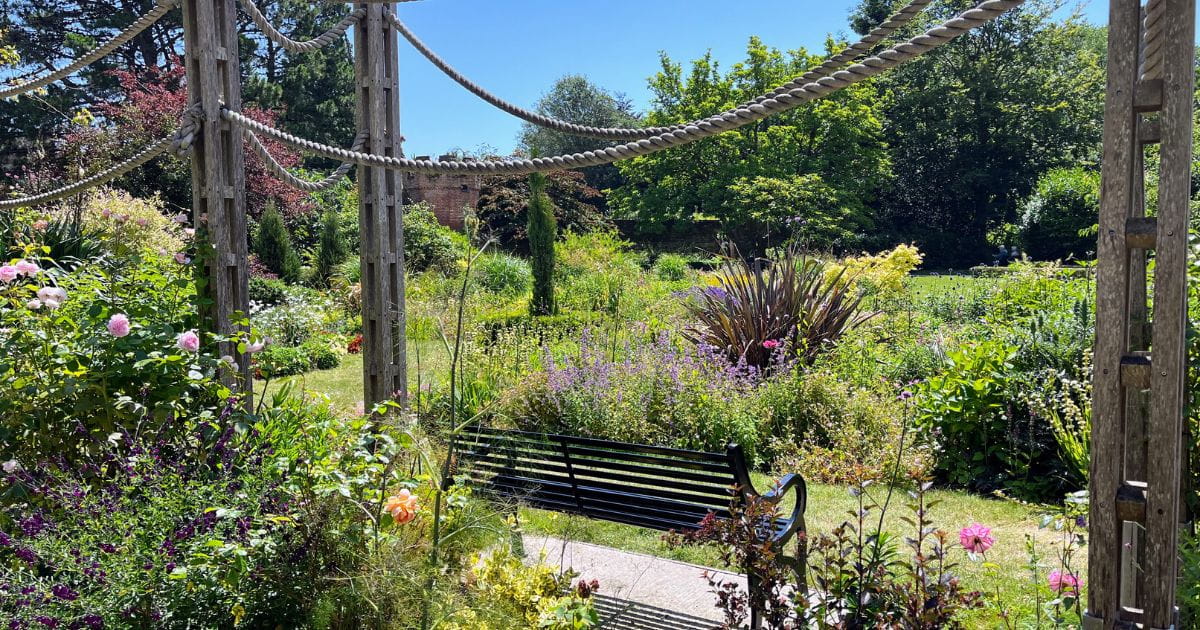
By the cathedral you will find Bishop’s Palace Gardens. This green oasis dates back to 1147, originally the garden of the Bishop. Since 1974, a large part of it has been open to the public. Parts of the Bishop’s Palace date back to the 12th century and are connected to the Cathedral by the 15th century cloisters. The gardens are a beautiful spot to sit, relax and perhaps, if the weather is nice, have a picnic. You can also see some impressive sections of the old city wall here.
Roman Walls
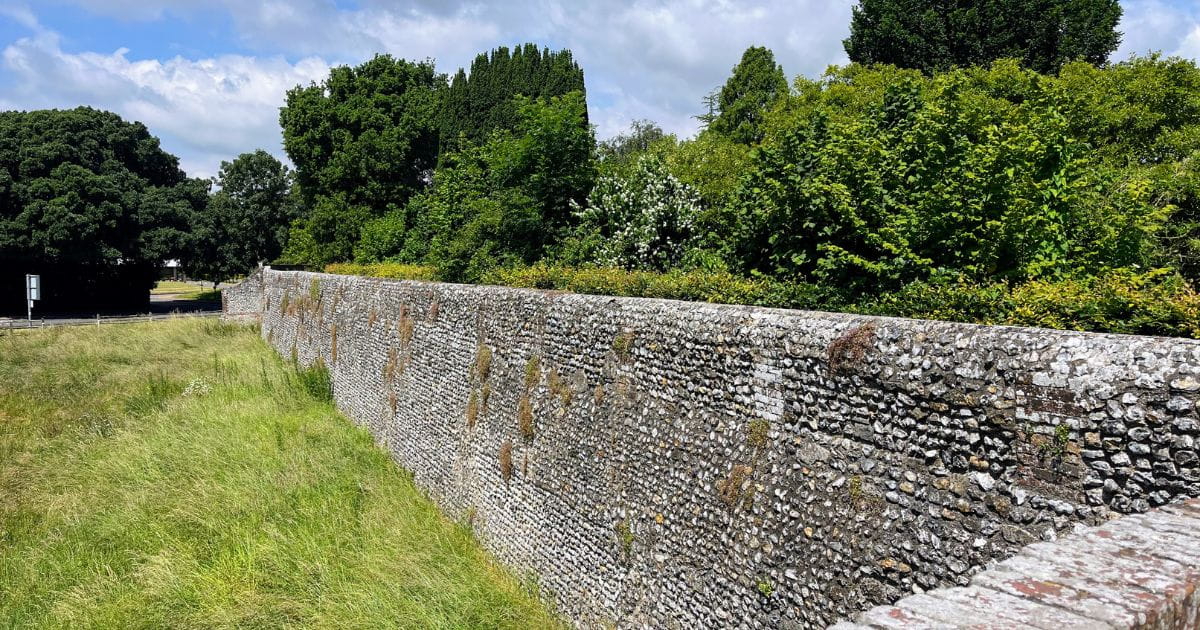
Chichester was founded by the Romans in the first century, and the four main streets and circular wall that they laid out still define the shape of the city today. The walls were constructed by the Romans in the third century and were then heightened and enhanced over the centuries. The Roman parts are largely below ground level today. Chichester has some of the best surviving city walls in the country and there is a route you can walk that takes in the whole circle.
Chichester Cross
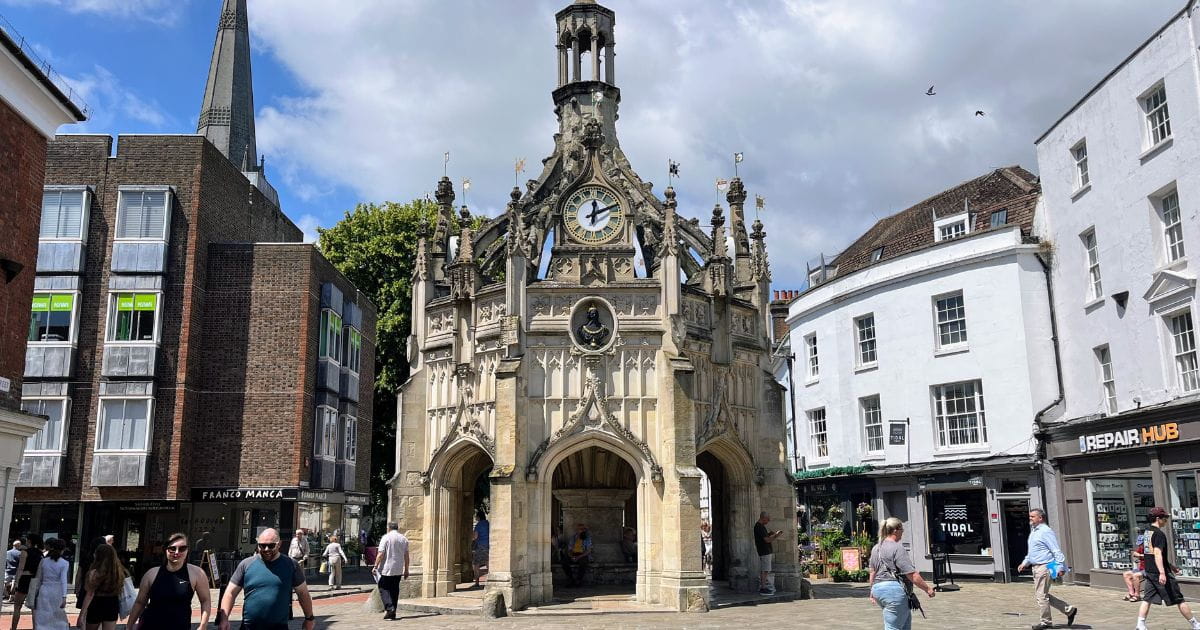
At the centre of the city is the Chichester Cross. It is thought to date from 1501, built by Bishop Edward Story. He built it to provide a covered market place for poor peasants, who only had a few goods to sell. They would not have to pay tolls to the city, provided they sell from beneath the cross. A bust of King Charles I was also added to the cross in the 1660s after the Restoration of King Charles II.
St Olave’s Church
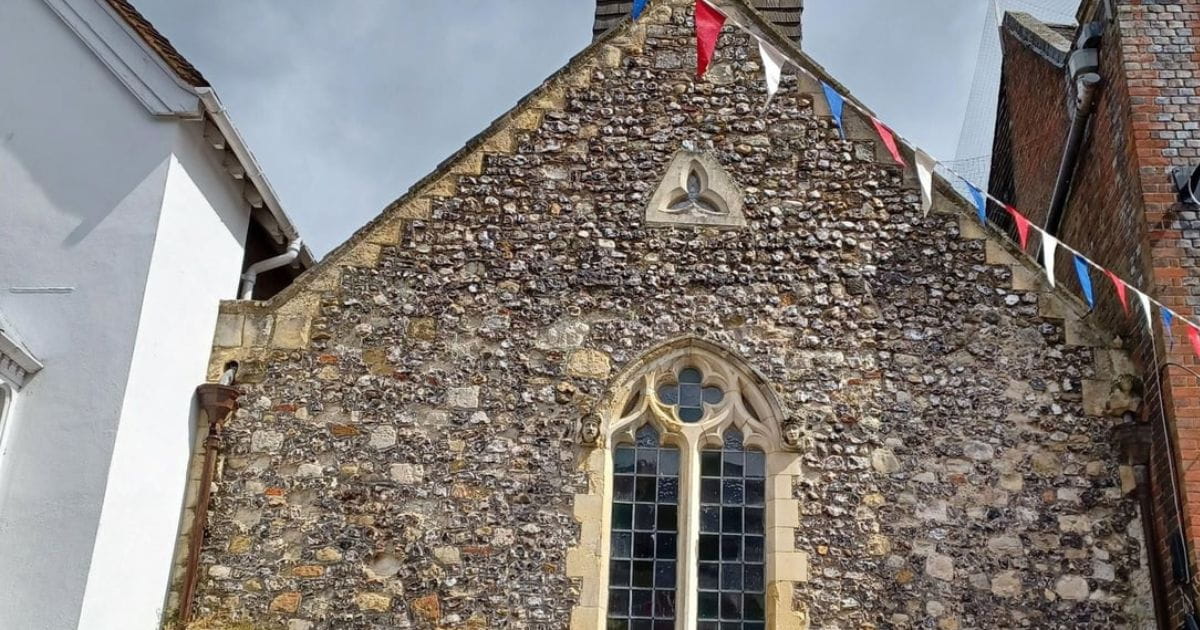
It is the oldest building in Chichester still in use and dates back partially to the mid 11th century. Some of the original Saxon church survives, but what you can see from the street is a 14th century frontage. It is dedicated to St Olaf, the first Christian king of Norway who died in 1030, and the church is thought to have been founded by Scandinavian merchants. It has been used as a Christian bookshop since 1956.
The Council House
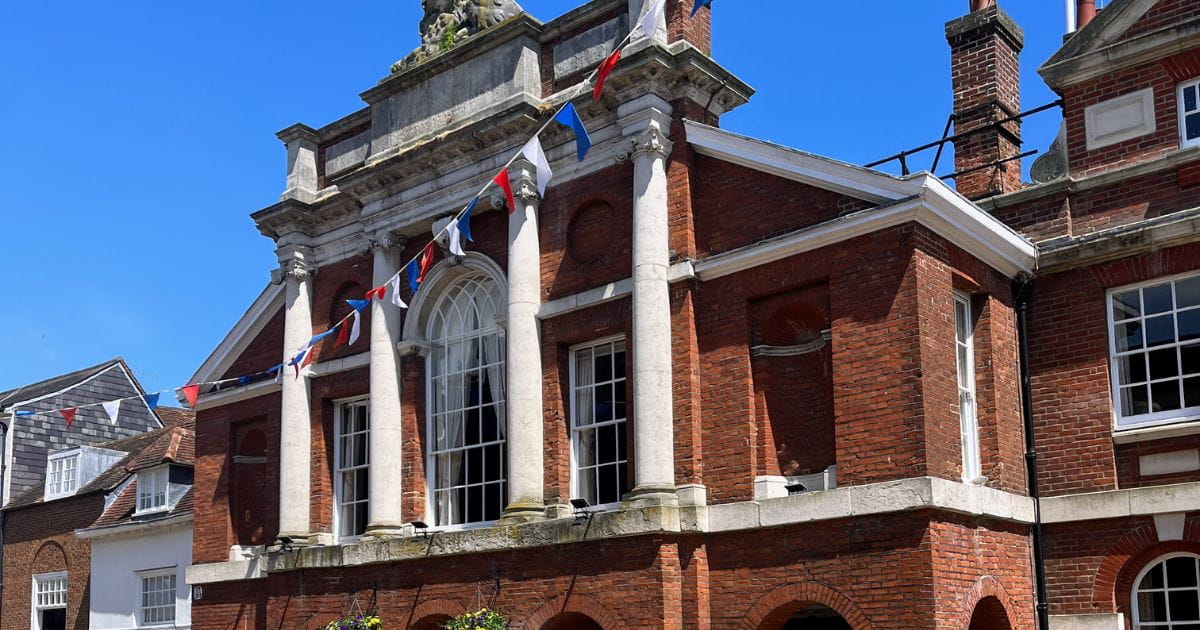
On North Street you will find the Council House. Meetings of the Chichester City Council have taken place here since the 16th century and the current building dates from 1731. Outside, you will see a statue depicting Admiral Nelson and his friend Vice Admiral Sir George Murray. Murray was Nelson’s Vice Admiral at the Battle of Copenhagen in 1801 and went on to become Mayor of Chichester in 1815. He lived on North Street and died in the city in 1819.
Priory Park
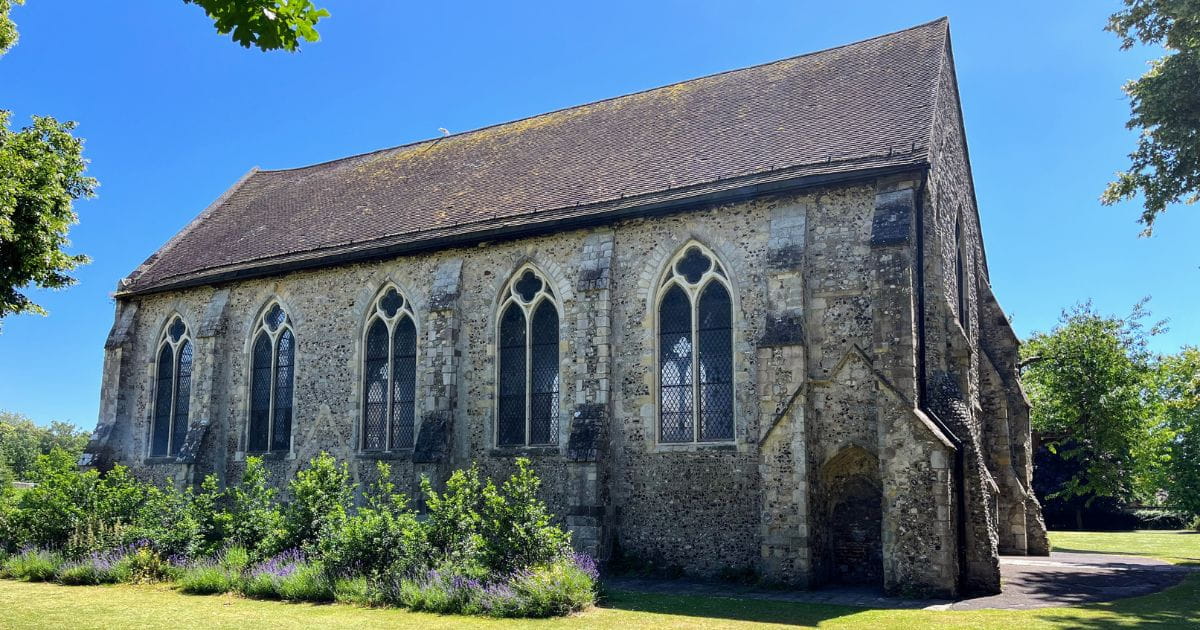
Another lovely green space in the city is Priory Park, encircled by sections of the city wall. It contains two sites of interest. First, the building pictured above, which dates from 1282 and is all that remains of the Franciscan friary that occupied this corner of the city until it was dissolved by King Henry VIII.
It was most likely the chancel of the friary, but from 1541 it started to be used for law courts and as the city hall or guildhall. It ceased to be the guildhall in 1850, went through various uses and today can be hired for events such as weddings.
You will also spot a mound: this is all that remains of the motte and bailey castle that was built here after the Norman conquest. Chichester Castle was ordered to be destroyed in 1217 by King Henry III after he recaptured it from the French in the First Baron’s War.
Fishbourne Roman Palace
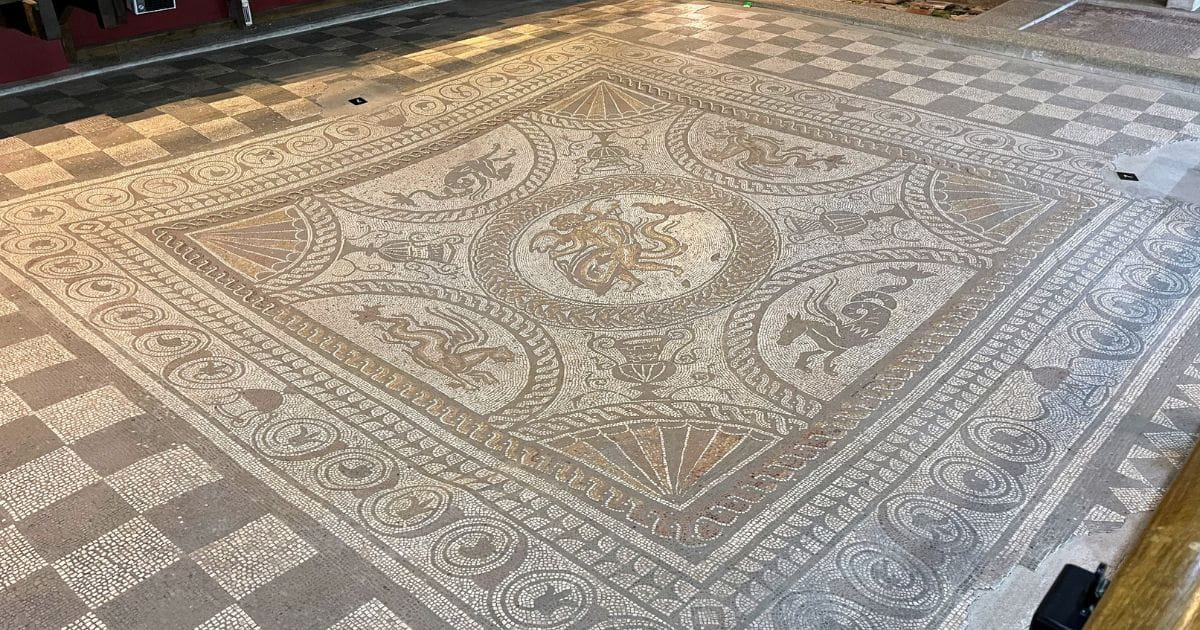
I also visited the Fishbourne Roman Palace. It is a 30-minute walk from central Chichester, but it is well worth it. At Fishbourne, there are excavated remains of what is thought to be the largest Roman dwelling in Britain. Between 1961 and present day, many excavations have taken place, and each time new discoveries have been made.
It is thought to have been built as the palace of a pro-Roman local chieftain called King Togidubnus. Construction started in 75AD, but it was expanded significantly over the years, before being destroyed by fire in the 280s. You can meander around many of the excavated remains today. The mosaics are particularly mind-blowing.
The mosaic above depicts Cupid on a Dolphin and dates from the 2nd century. It would have originally been on the floor of one of the main dining rooms in the North wing of the palace.
As I finished in Fishbourne, I got on the train from there instead of walking back into central Chichester. I was whisked back to London on Southern Railway, taking in the scenery of the countryside as I went. Wi-Fi on the train meant that I could easily post a few photos to social media about the historical treasures of Chichester.
About the Author
Jack Chesher is a London tour guide, explorer and author of the bestselling book London: The Hidden Corners for Curious Wanderers. Jack studied history at university but ended up working in hospitality. That is, until 2020, when he started his blog and social media accounts called Living London History. What started as a pandemic project has turned into his full-time job.