


The first warm stretch of the year tends to trigger the same instinct across London: get to the coast and start walking. That’s why coastal walks near London are such a go-to, especially along the South Coast, where routes link one seaside town to the next and you can enjoy stunning views, rolling hills, and a sense of freedom and fresh air.
What usually gets in the way isn’t the walk itself, it’s the logistics. If you’re anything like me, you’ll love the feeling of walking a route where every step brings new scenery. Out-and-back walks can have their charm, but knowing that at some point you’ll be turning around and seeing the same scenery you’ve already seen (and climbing the same hills) can be a bit tedious.
That’s where open jaw journeys come in. You can get the train to one station, walk as far as your heart desires without ever repeating the route, and then get the train back from another station. This is your ultimate guide to planning the best coastal walks near London, with everything you need to know about open jaw journeys and how to get the best train fares to match your plans.
Top tip: If you’re planning coastal walks, it’s worth starting with the route rather than the return. Pick a stretch of coastline you’ve always wanted to walk, find two stations that connect it, and let the journey unfold from there.
What is an open jaw journey?

An open jaw journey is a simple travel concept that works brilliantly for walkers. Instead of starting and finishing in the same place, you begin your journey at one railway station and finish at another, returning home from there.
It opens up more ambitious and rewarding routes, especially when exploring coastal walks in the UK. An open jaw journey allows you to cover a lot more ground, as you’ll be walking point-to-point without having to circle back or head back to where you started.
Why open jaw journeys are perfect for coastal walks

Once you start thinking this way, a lot of the best coastal walks near London become much more practical. Instead of limiting yourself to circular routes or out-and-back walks, you can follow the coastline naturally, which is often how these paths were meant to be experienced.
Along the South Coast, this approach works particularly well because:
- Southern railway stations are spaced conveniently along the coastline
- Walking routes often connect seaside towns directly
- You can tailor the distance depending on where you start and finish
It turns a standard day out into something that feels more like a mini adventure, without adding any complexity.
The best Sussex coastal walks using open jaw journeys
If you’re searching for coastal walks near London that really feel like a change of scenery, Sussex is usually top of the list. The stretch between Seaford and Eastbourne is one of the most popular, and was even voted the most rail-accessible walk in the UK.
Seaford to Eastbourne walk
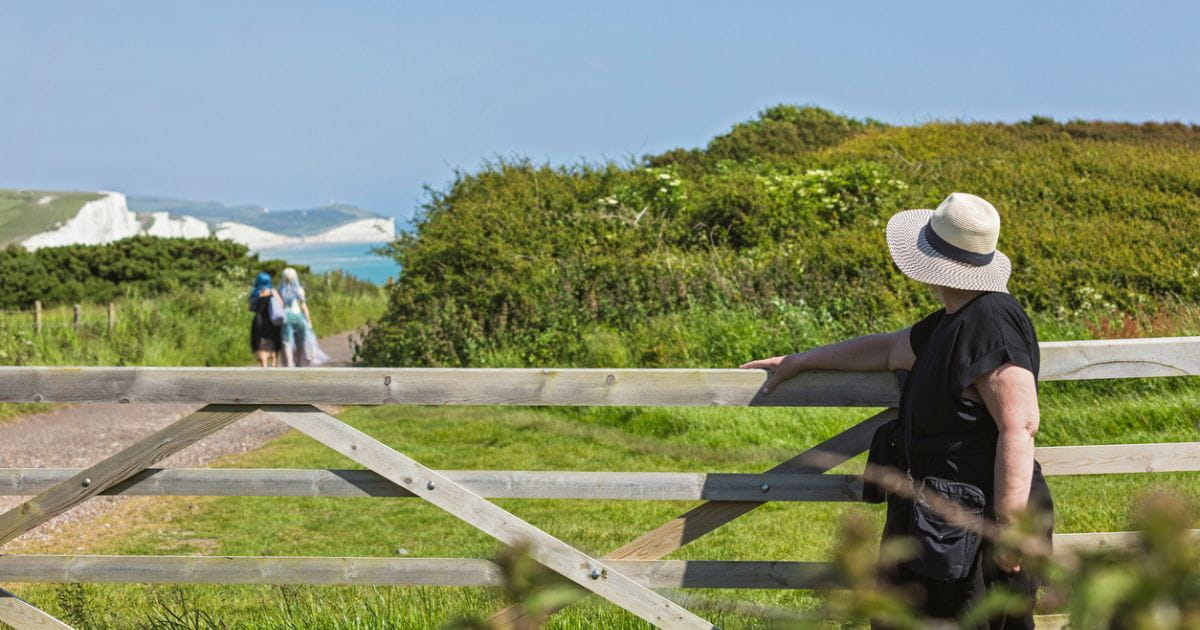
Distance: 21.9km (13.6 miles)
Difficulty: Moderate (some tough climbs)
Points of interest: Seven Sisters Cliffs, Birling Gap, Beachy Head
Take a Southern train to Seaford. It takes less than 90 minutes from London Victoria, and includes a change in the beautiful town of Lewes (well worth exploring on your way, or your way home).
The Seaford to Eastbourne open jaw walk starts gently, heading out of the town before the landscape opens up into the rolling cliffs of the Seven Sisters. The route builds gradually, with views across the Channel and plenty of spots to pause, snack, and take it all in.
This walk is easy to follow, as it’s well-signposted with waymarks. Finishing in Eastbourne means cafés, a pier, and a very welcome railway station right where you need it. No doubling back required, which is exactly why this route works so well as an open jaw journey.
Rye to Hastings walk
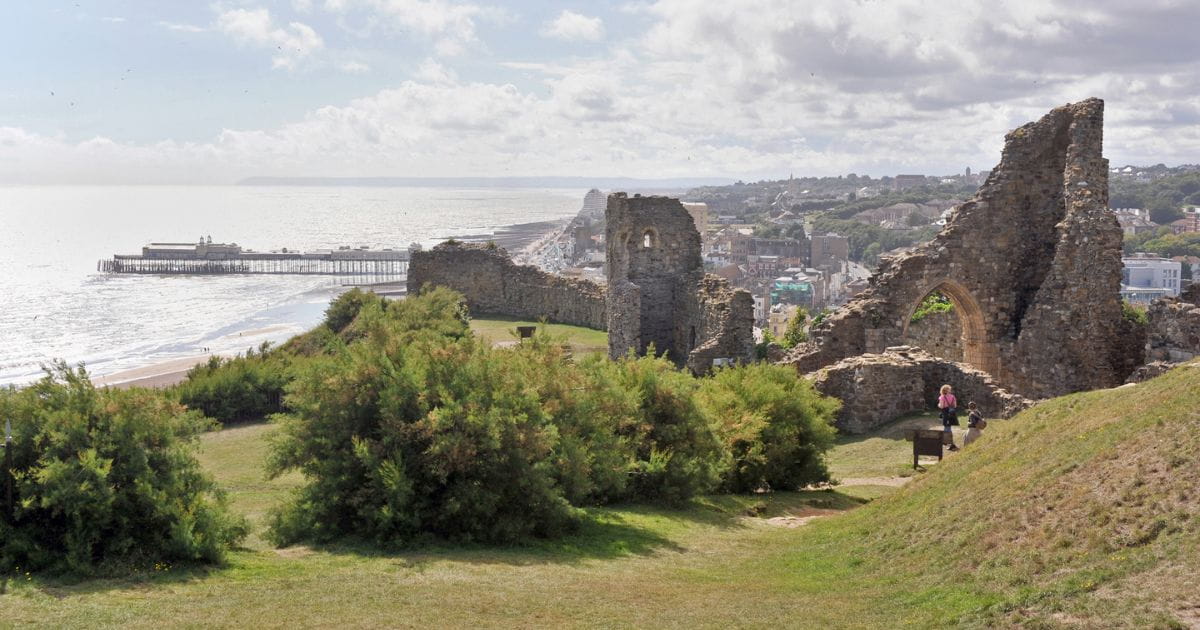
Distance: 19km (11.8 miles)
Difficulty: Moderate (long distance, mostly flat with some gentle climbs)
Points of interest: Camber Sands, Rye Harbour Nature Reserve, Winchelsea Beach
Take a Southern train to Rye. The Rye to Hastings open jaw walk starts with one of the most distinctive stretches of coastline in the South East, heading out towards Camber Sands before following the shoreline and nature reserves west. The route feels varied without being demanding, moving between open coastal paths, quiet villages and wide, uninterrupted sea views.
As you approach Hastings, the walk becomes more built-up, with the seafront gradually coming into view and plenty of options to stop for food or a drink before finishing. Hastings station is right by the coast, making the return journey simple. No need to loop back, which is exactly what makes this such a good open jaw route.
Hastings to Bexhill walk
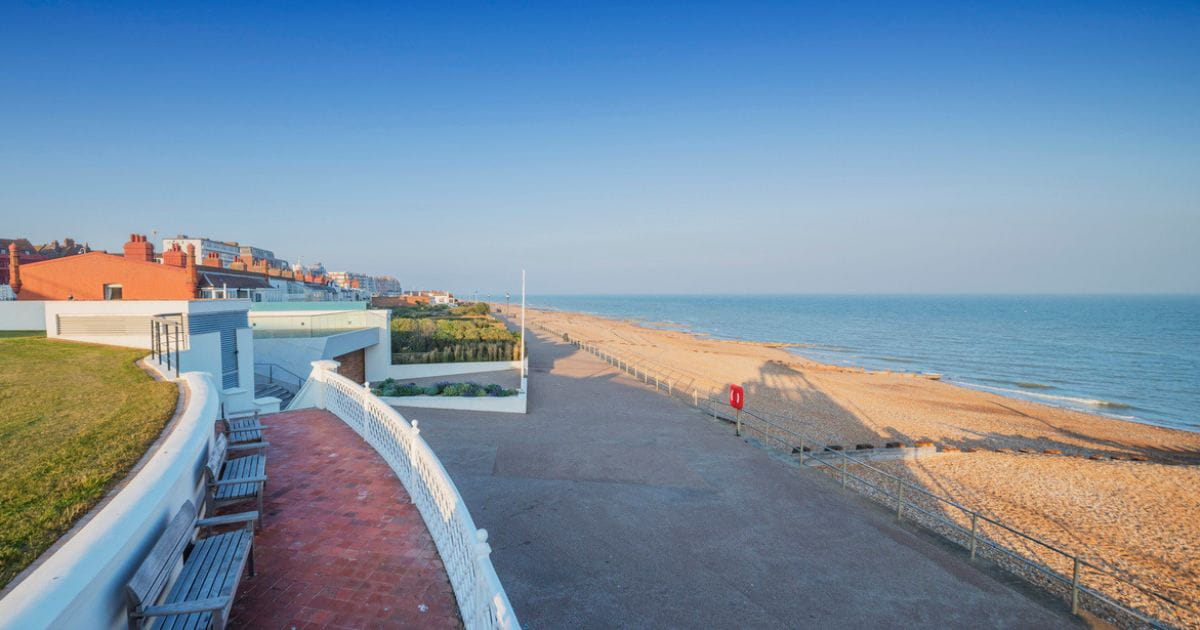
Distance: 8km (5 miles)
Difficulty: Easy (flat, paved coastal path)
Points of interest: Hastings Pier, St Leonards seafront, De La Warr Pavilion
The Hastings to Bexhill open jaw walk is one of the most straightforward coastal routes you can do, following the seafront almost the entire way. The path runs along National Cycle Route 2, meaning it’s well-maintained, easy to follow, and largely traffic-free.
Starting near Hastings Pier, you’ll head west through St Leonards, where the architecture shifts and the promenade opens out. It’s a steady, relaxed walk with uninterrupted sea views, making it ideal if you want something low-effort but still coastal.
As you approach Bexhill, the route brings you straight onto the seafront, passing the distinctive De La Warr Pavilion before reaching the station. It’s a clean, simple finish with no need to double back, exactly what you want from an open jaw walk.
Brighton to Worthing walk
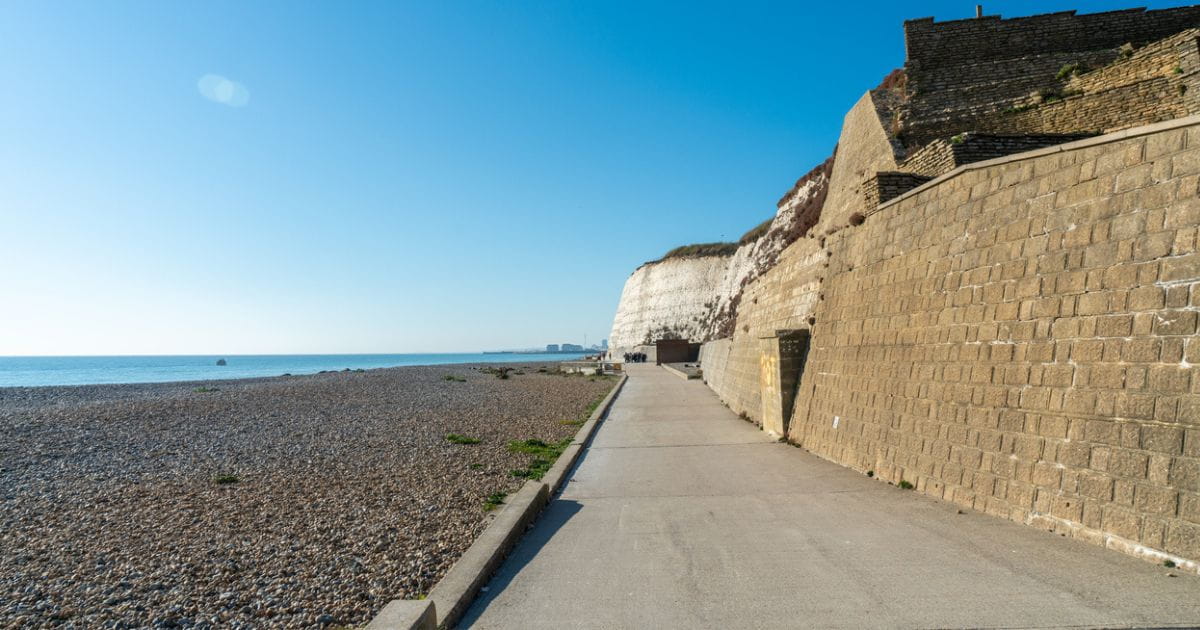
Distance: 18km (11 miles)
Difficulty: Easy to Moderate (mostly flat, long distance)
Points of interest: Brighton seafront, Shoreham Harbour, Lancing Beach, Worthing Pier
Take a Southern train to Brighton. It’s one of the easiest coastal starting points to reach from London, with regular direct trains.
The Brighton to Worthing open jaw walk follows the coastline west, linking together a series of promenades, beaches and coastal paths. The first stretch takes you out of Brighton along the seafront before reaching Hove and continuing towards Shoreham.
From there, the route crosses the River Adur and carries on along quieter beachfront paths through Lancing, before opening out again as you approach Worthing. The terrain is largely flat throughout, making it manageable despite the longer distance.
Finishing in Worthing gives you a proper end point, with the pier, cafés and the station all within easy reach. It’s a great example of how an open jaw journey lets you cover a longer stretch of coastline without any logistical hassle.
Read more: Top Brighton walks and hikes
Coastal walks with pubs: plan your open jaw journey with stops
One of the underrated advantages of an open jaw journey is how much easier it is to plan stops along the way. You’re not tied to looping back, so you can choose pubs, cafés, or viewpoints that sit naturally along your route.
Shoreham-by-sea to Brighton walk

Distance: 14km (8.7 miles)
Difficulty: Easy to Moderate (mostly flat with some shingle and promenade sections)
Points of interest: Shoreham Harbour, Hove Lagoon, Brighton seafront, King Alfred Leisure Centre
Take a Southern train to Shoreham-by-Sea. It’s around 1 hour 20 minutes from London Victoria, with services running regularly.
The Shoreham-by-Sea to Brighton open jaw walk follows a long, uninterrupted stretch of the Sussex coast, starting with quieter harbour scenery before gradually opening out onto wider beachfront paths. It’s an easy route to follow, mostly flat, and works well if you want a longer coastal walk without any real navigation stress.
Early in the walk, you pass through Shoreham Harbour and out towards Southwick, where the shoreline becomes more open and the sea views start to dominate the route. This is where you’ll find a natural stopping point at The Smuggler’s Rest in Southwick, a classic seaside pub that works perfectly for a mid-walk break, especially on a sunny day.
From there, the walk continues along the promenade through Hove, passing beach huts, cafés and open shingle beaches before you reach Brighton’s seafront. The final stretch into Brighton feels like a natural arrival point rather than an abrupt end, with the station just a short walk inland, making the return journey simple.
It’s a great example of how an open jaw journey turns a straightforward coastal path into a proper point-to-point day out, with a pub stop built in rather than squeezed in.
How to make your open jaw journey even easier (and more affordable)

Once you’ve picked your route, a few simple ticketing options can make the whole experience smoother and more cost-effective.
Use a DaySave ticket for flexibility
A DaySave ticket offers unlimited off-peak journeys across the Southern network for the entire day, which is ideal for coastal walks and open jaw journeys. DaySave gives you the freedom to adjust your plans without worrying about separate fares.
Add PlusBus for easy connections
If you want to explore further, PlusBus offers unlimited discounted bus and tram travel in a specific zone, which you can add to your train ticket. It’s especially useful for reaching trailheads or getting back from quieter coastal spots.
Check train times in advance
Because you’re not returning to your starting point, it’s worth checking return services from your finishing station before you set off. That way, you can pace your walk without any last-minute stress.
Why open jaw journeys work so well for coastal walks in the UK
Open jaw journeys line up perfectly with many of the UK’s best coastal walks. Instead of following a circular route, you can follow the coastline as it unfolds, moving from one place to another in a way that feels like a real adventure.
For walkers based in London, it’s one of the easiest ways to access:
- Coastal walks near London with minimal planning
- Longer, more scenic routes
- A wider variety of landscapes across a single day
Once you try open jaw journeys, it’s hard to go back to traditional out-and-back routes. You get better views, more variety, and a much more satisfying sense of journey from start to finish.
