

I have a confession to make: I used to be scared of trains.
The noises, the accessibility (I had four kids under four with a triple pushchair), I thought the railway wasn’t for people like me. It felt intimidating and male-dominated. Now, my work as an On-Board Supervisor (OBS) and the women I’ve met in the rail industry have changed my life.
My introduction to the railway industry
It was my husband who first suggested I apply for a job on the railway. He tried to convince me for years, and in 2020, I finally took the leap and started out on the platforms at Caterham and Purley.
When I first started, I was so anxious and had no confidence. Now, the manager who first trained me tells me he can’t believe the difference between the person I was then and who I am now.
I had children when I was 18, and for years I thought of myself simply as “a mum”. Through working on the railway, I’ve come to realise I can be a mum, and so much more.
Finding my purpose and gaining confidence
Throughout my four years working on the platforms, I took on more training and responsibilities, and in November 2024 I won a customer service award. My colleagues and manager encouraged me to keep pushing myself, so I applied to become an OBS, and I’ve now been in that role for a year, with a recent application to become a mentor as well.
What I love about the railway is that while it might look male-dominated from the outside, behind the scenes there are so many women lifting each other up. It was women who encouraged me to progress my career, women who helped build my confidence, and women who showed me that this space could absolutely be mine too.
I love being an OBS because helping people gives me so much back. I go home proud every day, and I love telling my kids about the moments that have made a difference. Sometimes it’s something as small as taking old tickets and writing uplifting messages on them for passengers, but those gestures can carry surprising weight when someone is having a tough day.
This job has made me love who I am, and that’s not something I ever expected to say about work.
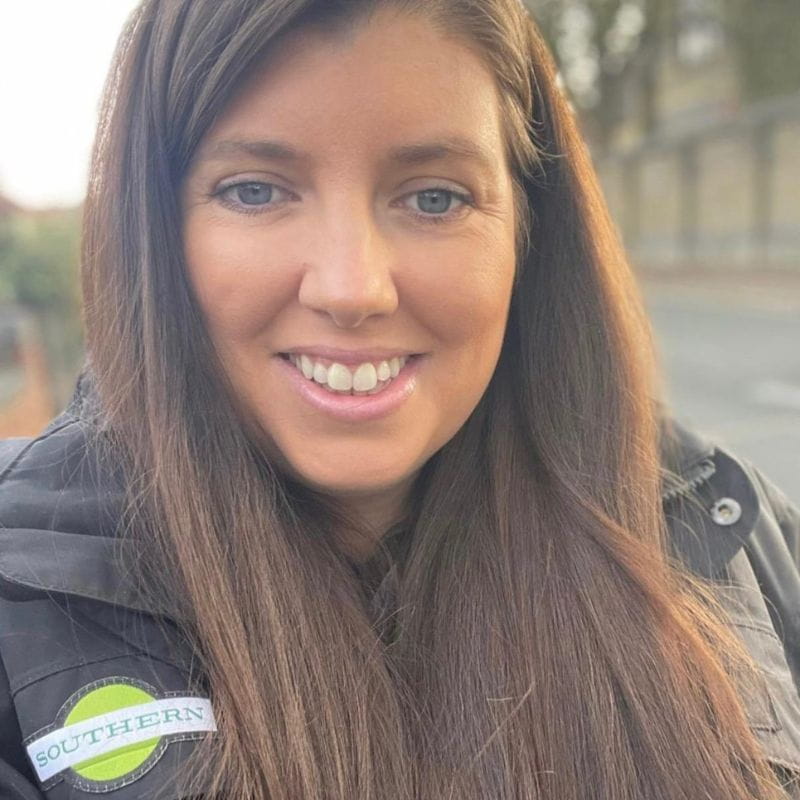
A typical day for me as an Onboard Supervisor
A typical day for me starts at 3am. I walk for half an hour to the night bus, then get the 4am train to the depot, a service that’s always full of railway staff gearing up for the day ahead.
Once I’ve signed on, I’m onboard helping passengers. One of my favourite routes is London Victoria to Ore, because it’s long enough that you really get to know people. Over that two-hour journey passengers tell me where they’re going, why they’re travelling, and sometimes things they probably hadn’t planned to share with a stranger that morning. I love that sense of connection and the feeling that, for a little while, I’m part of their story.
I truly believe that when someone buys a train ticket, they’re not just going on a journey from A to B, they’re getting an experience. It might be their first time out of the house since COVID, a child’s first time on a train, or excited grandparents on their way to see their grandchildren. Sometimes it’s someone travelling to a funeral, carrying something heavy with them and needing kindness rather than cheerful small talk. That customer service is so fulfilling for me.
My life as a survivor
I’m a survivor of domestic abuse, and that experience has made me acutely aware of what’s happening around me.
On late-night shifts, I always make a point of walking through the train because that’s when young girls might be travelling alone or women might be feeling nervous. My presence can act as a deterrent if someone is considering doing something they shouldn’t, and reassurance for those who are feeling unsafe.
Those moments are when my job feels less like a role and more like a responsibility I’m genuinely proud to carry.
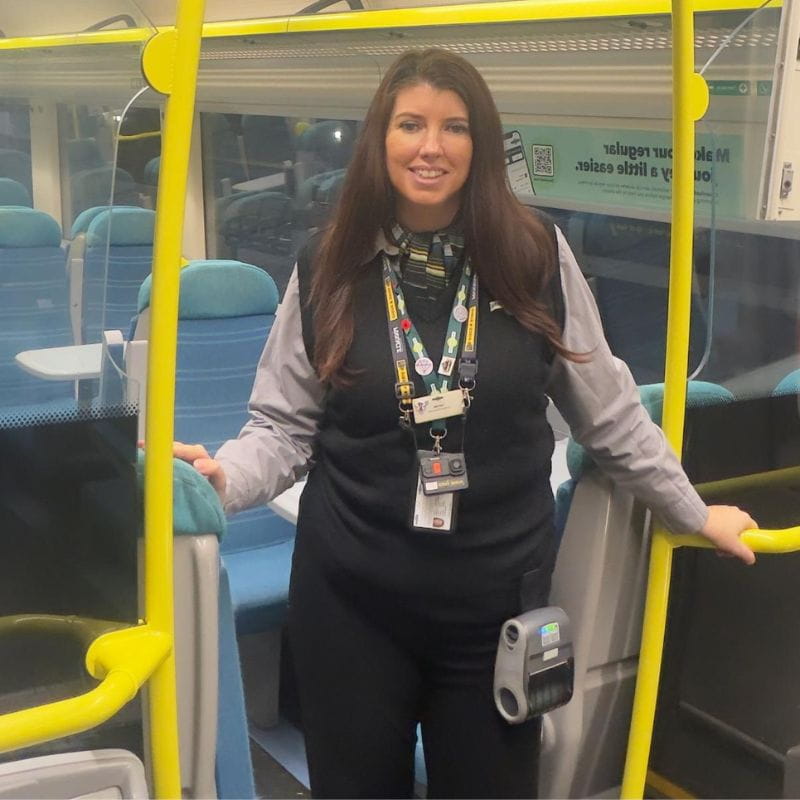
Supporting women on and off the train
Supporting other women is incredibly important to me, and one of the best things to come out of my job has been the connections I’ve made with my colleagues. I’m part of a group chat with women from the depot, which originally started as a Hen Do group and is now all about support and empowerment.
Shift work can be lonely, especially when someone is having a hard time, so I try to be someone people can talk to, whether that’s arranging days out, checking in during breaks, or just reminding a colleague that they’re not on their own. We’ve even created a quiet room at the depot, which has become a valuable sanctuary.
I keep heat packs, painkillers, and hair ties in my locker because someone might need them, and it feels good to be able to help in small, practical ways. It’s incredibly powerful for women to support each other.
Living and working with health challenges
I have endometriosis, which took ten years to be diagnosed, and I had surgery in 2020 that genuinely changed my life. Before that, the symptoms were so severe that I sometimes had to take time off work, and I worried about what that might mean for my future. I’ll need surgery every five to ten years, but that first operation gave me back a sense of control over my body and my life that I hadn’t had for a long time.
I’m also going through perimenopause at 39, which came with its own learning curve. Before I was diagnosed, I just thought I was being moody, when in reality I was dealing with fatigue, brain fog, and physical changes that made a frontline role more challenging. My bag is now stocked with heat pads, which have become a kind of survival kit.
A colleague once suggested Pilates because I could do it at home around my shifts, and that small suggestion ended up having a big impact. I’ve lost over 40lbs and found a way to look after myself that actually fits into my life. Frontline staff don’t want to be told to “just go to the gym”, because most of the time we’re knackered. What really helps is practical support, like short videos we can do at home or something as simple as free fruit in the mess room to encourage healthier choices.
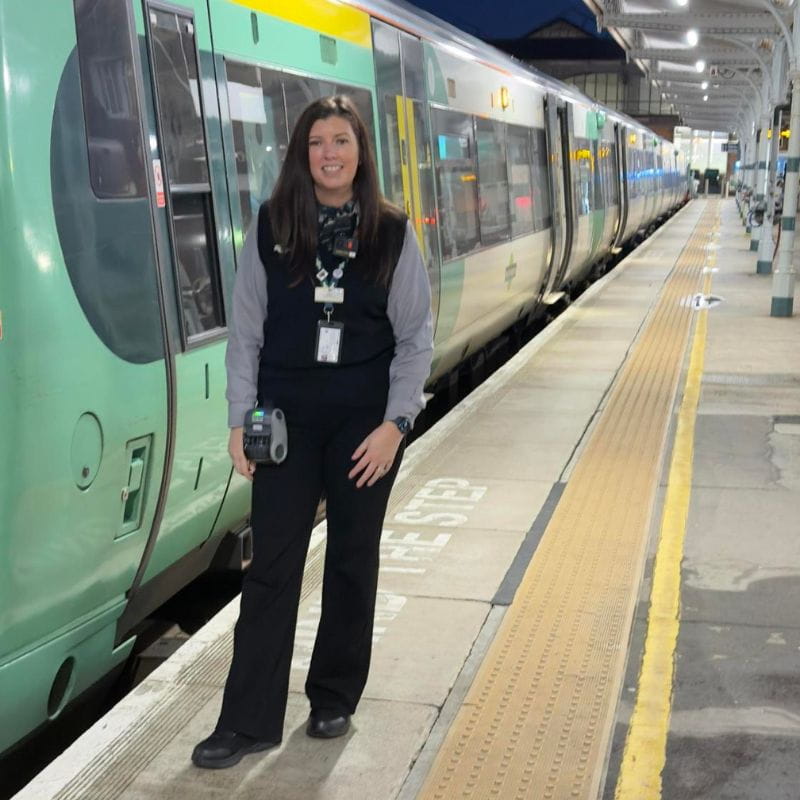
Taking my story beyond the railway
Because of my experiences, I speak in schools about recognising toxic traits in relationships. My own experience began when I was 14, starting with being told what I could and couldn’t wear and who I could and couldn’t spend time with, and slowly escalating from there.
Now I talk to young people about recognising those early signs and feeling able to speak up. One of the most powerful moments for me was when a mum who’d come along just to accompany her daughter realised, during one of my talks, that she herself was in an abusive relationship and was able to leave safely. Knowing that my story helped someone change their life is something I’ll always be proud of.
I also use what I’ve learned to support colleagues, including around financial abuse, which is about listening, believing people, and offering support without judgement.
Why I’m proud of who I’ve become
I get real enjoyment out of my job, and I’m surrounded by colleagues who are deeply passionate about what they do. I’m proud that I’m not a statistic and that I work in a front-facing role rather than being hidden away somewhere out of sight.
When I think back to the woman who was scared of trains and believed the railway was an industry for men, it makes me smile. Accessibility and customer service mean everything to me, and this job has made a huge difference to my life.
I’m proud of the work I do, I’m proud of who I am, and I truly feel like this is where I belong.
If you or someone you know has been affected by the issues raised in this article, the following support services are available:
• National Domestic Abuse Helpline: 0808 2000 247
• LGBT+ Domestic Violence Helpline: 0800 999 5428