

When I look back, it’s hard to believe how quickly the time has gone. I joined Southern in October 2004 and, more than twenty years later, I can honestly say I still enjoy it just as much. I love driving trains and feel lucky to be able to say that about my job. It’s very satisfying, and I still look forward to coming into work every day.
How I first became a train driver
Before I became a train driver, I worked in the fire service for eight years in the control room in Chichester. It was a good job and an important one, and I’d never really thought about the railway as a career until one particular moment. I was sitting at Ford level crossing one day and saw one of the new Electrostars pass through. I remember watching it and thinking, “Wow, I’d love to drive one of those.”
At the time, my godfather worked on the railway, so I mentioned it to him and he got me an application. From there, everything happened quickly. From first expressing an interest to having a contract of employment took just ten weeks, which I really didn’t expect.
But becoming a train driver isn’t something that’s guaranteed just because you apply. It’s not an easy job to get into, and on my training course, only about 75 percent of people passed and went on to become full-time drivers. Once you’re in, you still have to pass all your training and assessments and keep meeting the standards. It’s a high bar, and you have to work hard to stay there. It isn’t an easy job to get, and it isn’t an easy job to keep.
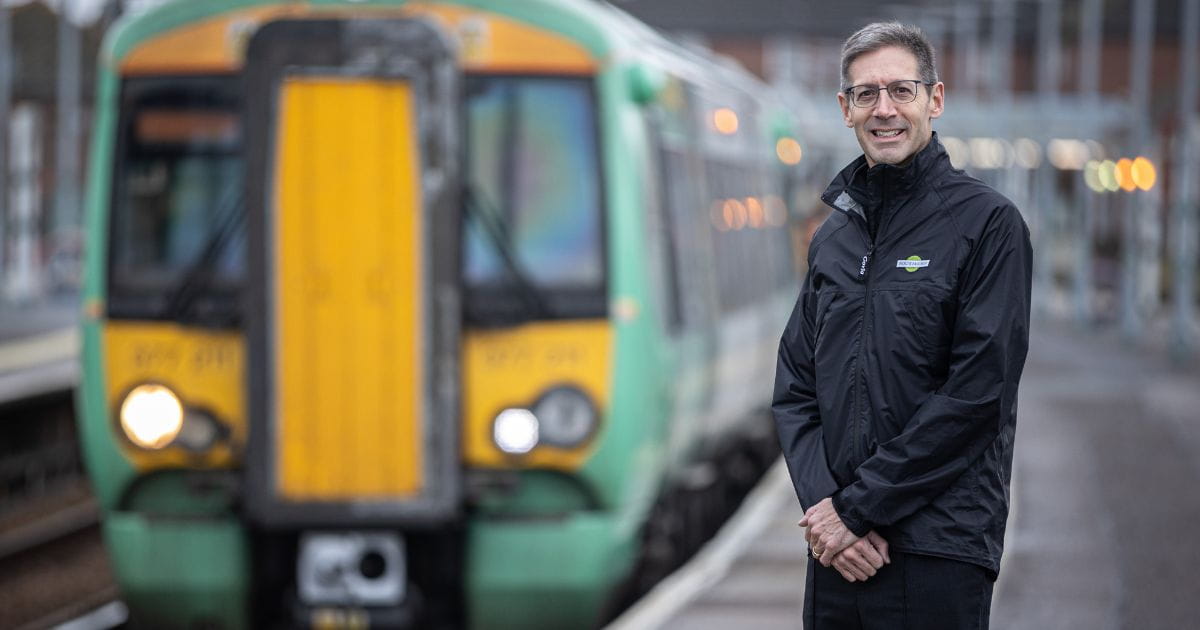
Why I love being a train driver
One of the things I enjoy most is that I don’t take my work home with me. When I finish a shift, that’s it. I can switch off and enjoy my time outside work. I also like the flexibility of the shift patterns as they suit me well. I’m better on late shifts, whereas some people are better on early starts, so you find what works for you. I genuinely look forward to coming in each day, and I love being able to get people from A to B safely and on time.
When I’m driving a train, I’m acutely aware of how many people I’m responsible for. I know there are hundreds of people behind me, all trying to get somewhere important, whether that’s into London, to the airport, to work, or home to their families. It’s satisfying to think that I’m helping all of them get where they need to be, but it’s also quite a responsibility.
Sometimes there are circumstances beyond my control that cause delays, which can be frustrating, but I always do my best to keep passengers updated. Communication is really important, and letting people know why they’re waiting or why the train is running late makes a big difference.
What most people don’t realise about being a train driver
A lot of people think being a train driver is easy, but it really isn’t. You have to be good at multitasking and prioritising, and you have to stay focused for long periods of time. I also have an active pilot’s licence, and a lot of what I’ve learned from flying carries over into the cab.
In aviation, the priorities are “aviate, navigate, communicate”, and that way of thinking applies on the railway too. Every ten minutes or so, I go through a sequence of checks in my head to make sure I’m staying focused and not allowing my mind to wander or switch off. It can be mentally quite taxing, and you have to stay on top of it all the time.
.jpg)
My journey to becoming a magistrate
2004 was a particularly busy year for me, because it wasn’t just the year I became a train driver, it was also the year I became a magistrate. That came about in quite a different way. I saw an advert in the county council’s Connections magazine, and on the back page it listed various qualities and personality traits and asked, “Have you considered becoming a magistrate?” It talked about things like integrity, common sense, and the capacity to treat people fairly. At the time, I didn’t really know what a magistrate was, but I read it and thought that I had those qualities, so I decided to find out more.
As part of the application process, you have to go to court and observe what happens. I really enjoyed it and quickly realised that it was something I’d love to do. I then completed a written application and went through two interviews. The first interview was tough. They deliberately challenge you, because they need you to be able to recognise your own prejudices and set them aside. You have to be able to judge people fairly, and the only way to do that is to understand yourself first, so I think it’s right that the process is demanding.
I didn’t think I’d done well enough, so I was surprised when I got a call inviting me back for a second interview. In that one, we were given a list of offences and asked to put them in order of seriousness and explain our reasoning. We then discussed them as a group. I found that really useful, because it puts you straight into the sort of discussions you’ll have as a magistrate, weighing up facts and evidence and listening to different viewpoints.
What it’s like being a magistrate
I’m now a criminal court magistrate, although there are also family court magistrates. We usually sit as a panel of three. Almost all criminal cases in England and Wales start in the magistrates’ court, and around 90 percent of them finish there, which means the vast bulk of the cases in the criminal justice system are dealt with by magistrates.
In the courts, there’s a mix of ordinary magistrates like me and professionally trained judges such as lawyers, barristers, and legal advisers who assist us.
One of the things that stands out is how varied the work can be. You might be dealing with something quite minor, and then suddenly you’re faced with something very serious. One case that has always stayed with me happened on a Saturday morning. We’d had a run of fairly minor cases, then the legal adviser told us we had a late arrival that we had to hear.
The accused were in custody, and the charge was perverting the course of justice. We’d gone, in a matter of minutes, from a small theft to something extremely serious. You never know what you’re going to get on any given day.
.jpg)
How being a train driver complements my work as a magistrate, and vice versa
Over time, I’ve realised how much my work as a magistrate complements my work as a train driver. In both roles, concentration is the most important skill. You receive a lot of information, you have to filter it, decide what matters, and stay focused for long periods. Communication is also vital in both jobs. You have to use appropriate language and make sure that what you’re saying is understood.
Another thing they have in common is the connection to my local community. I’m a magistrate in my community. As a magistrate, I’ve spoken to schools and community groups about what we do, helped with mock trials, and attended public meetings, including one where local residents had concerns about crime.
It’s important to be visible and approachable, to explain what we do, and to help reassure people. There’s much more to being a magistrate than simply sitting in court.
My advice for anyone interested in becoming a magistrate
Outside of work, I still love travelling by train. It’s easy, convenient, and reliable. My favourite destination is London, and I especially enjoy going there with my wife to see theatre shows. Even after all these years, I still appreciate how simple and enjoyable rail travel can be.
If anyone is interested in becoming a magistrate, I’d really encourage them to go along to a court and see if it’s for them. There’s also a very helpful website, icanbeamagistrate.co.uk, where you can find out more about what’s involved and how to apply. It’s a really worthwhile thing to do, and I’d encourage anyone who’s curious to look into it.
When I think about it now, I honestly can’t believe how quickly those twenty-one years have gone, both on the railway and in court. I feel fortunate to have had two roles that I care so deeply about, that challenge me in different ways, and that allow me to make a positive contribution every day.